


- Protocols

- Articles and Issues
- For Authors
- About
- Become a Reviewer


A Protocol for Accelerating Homozygous Line Screening in Arabidopsis thaliana

(*contributed equally to this work) Published: Vol 16, Iss 18, Sep 20, 2026 DOI: 10.21769/BioProtoc.5819 Views: 637
Reviewed by: Nazrin Abd AzizAnonymous reviewer(s)
 PDF
PDF  Ask a question

Protocol Collections
Comprehensive collections of detailed, peer-reviewed protocols focusing on specific topics



Related protocols
Abstract
Obtaining homozygous mutant and transgenic lines is a critical yet time-consuming step in Arabidopsis thaliana research. Conventional breeding procedures require seeds to undergo complete maturation and natural desiccation before harvest, followed by cold stratification to overcome seed dormancy. This process substantially prolongs generation turnover and delays genetic screening. Here, we describe a rapid germination strategy based on the use of partially dehydrated seeds collected approximately 15 days after pollination (DAP). At this developmental stage, embryos have reached physiological maturity, while the seeds have not yet entered deep desiccation-induced dormancy. After surface sterilization and short-term cold treatment (2–3 days at 4 °C), these seeds readily germinate on 1/2 MS medium and develop into normal seedlings. By bypassing the prolonged maturation and dormancy phases associated with naturally dried seeds, this protocol shortens each generation cycle by approximately 1–2 weeks. The method is particularly useful for accelerating the propagation of transgenic materials and the identification of homozygous mutant lines in Arabidopsis.
Key features
• The time-consuming and tedious screening of transgenic homozygous plants is a bottleneck limiting gene function research.
• Provides a simple and effective approach for accelerating homozygous line identification in Arabidopsis thaliana.
• Seeds harvested at 15 days after pollination can germinate normally, shortening the screening cycle by approximately 10 days per generation.
• Applicable to T-DNA insertion mutants and transgenic lines carrying GFP or selectable markers, without requiring specialized equipment.
Keywords: Arabidopsis thaliana Homozygous screening
Seed dormancy
Rapid generation cycling
Transgenic line
T-DNA mutant
Homozygous screening
Seed dormancy
Rapid generation cycling
Transgenic line
T-DNA mutant
Graphical overview
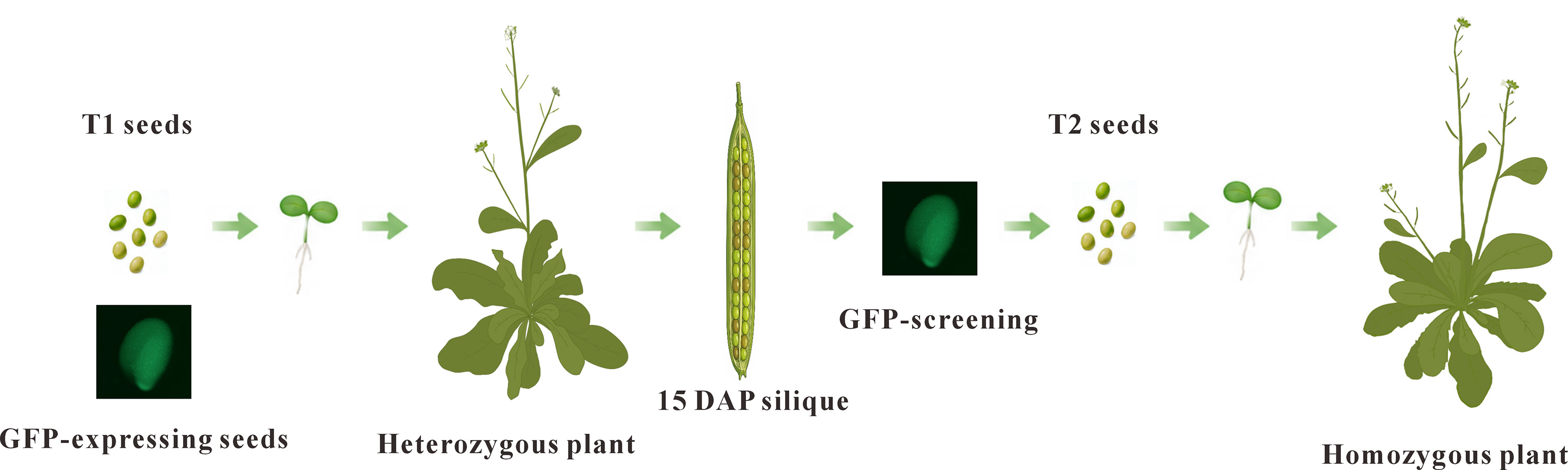
Protocol for accelerating homozygous line screening using uncompleted mature seeds in developing siliques. Artwork co-created with Procreate and AI-assisted design tools.
Background
Obtaining homozygous mutants and stable transgenic lines is a fundamental yet time-consuming step in plant genetics and molecular biology research. For Arabidopsis thaliana, the period from sowing to complete seed maturation and natural drying typically lasts 8–9 weeks or even longer. During this late stage of natural development, seeds undergo intense dehydration accompanied by significant accumulation of abscisic acid (ABA), entering a state of primary dormancy [1–4]. Conventional experimental protocols require researchers to patiently wait until the plants turn yellow and dry, followed by several days of low-temperature vernalization to reawaken dormancy. Previous studies have shown that at 9 days after flowering (DAF), the ABA content per gram of dry weight in seeds is approximately twice that in siliques at the first peak of ABA accumulation. At this stage, the majority of ABA accumulated in siliques is concentrated in seeds, a distribution that is unfavorable for seed germination. By 12 DAF, the ABA level in seeds decreases to one-third of that at 9 DAF; at 15 DAF, ABA levels further decline compared to those at 12 DAF (see Figure 1), thereby creating more favorable conditions for seed germination in vitro [5]. Based on the physiological dynamics of seed development, approximately 15 days after pollination (DAP), Arabidopsis young seeds in developing siliques reach the cotyledon stage, possessing the morphological foundation for germination due to relatively lower ABA levels; simultaneously, the maturing seed coat begins to show signs of browning, but the seeds are not yet fully dehydrated. At this stage, seeds have not yet established deep dormancy induced by severe dehydration (Figure 1). By exploiting this transient developmental window, seeds can be harvested before entering deep dormancy and germinated directly on 1/2 MS medium. This approach overcomes conventional limitations on Arabidopsis generation times and reduces the duration of each generation by approximately 1–2 weeks. In all, in the three generations (nearly reaching T3) to screen homozygous transgenic lines, the total screening time can be reduced by 30 days. Furthermore, through antibiotic screening plus GFP observation, the homozygous transgenic lines can be obtained at the T2 generation. Reducing the time required for tedious homozygous plant screening can facilitate gene function research.
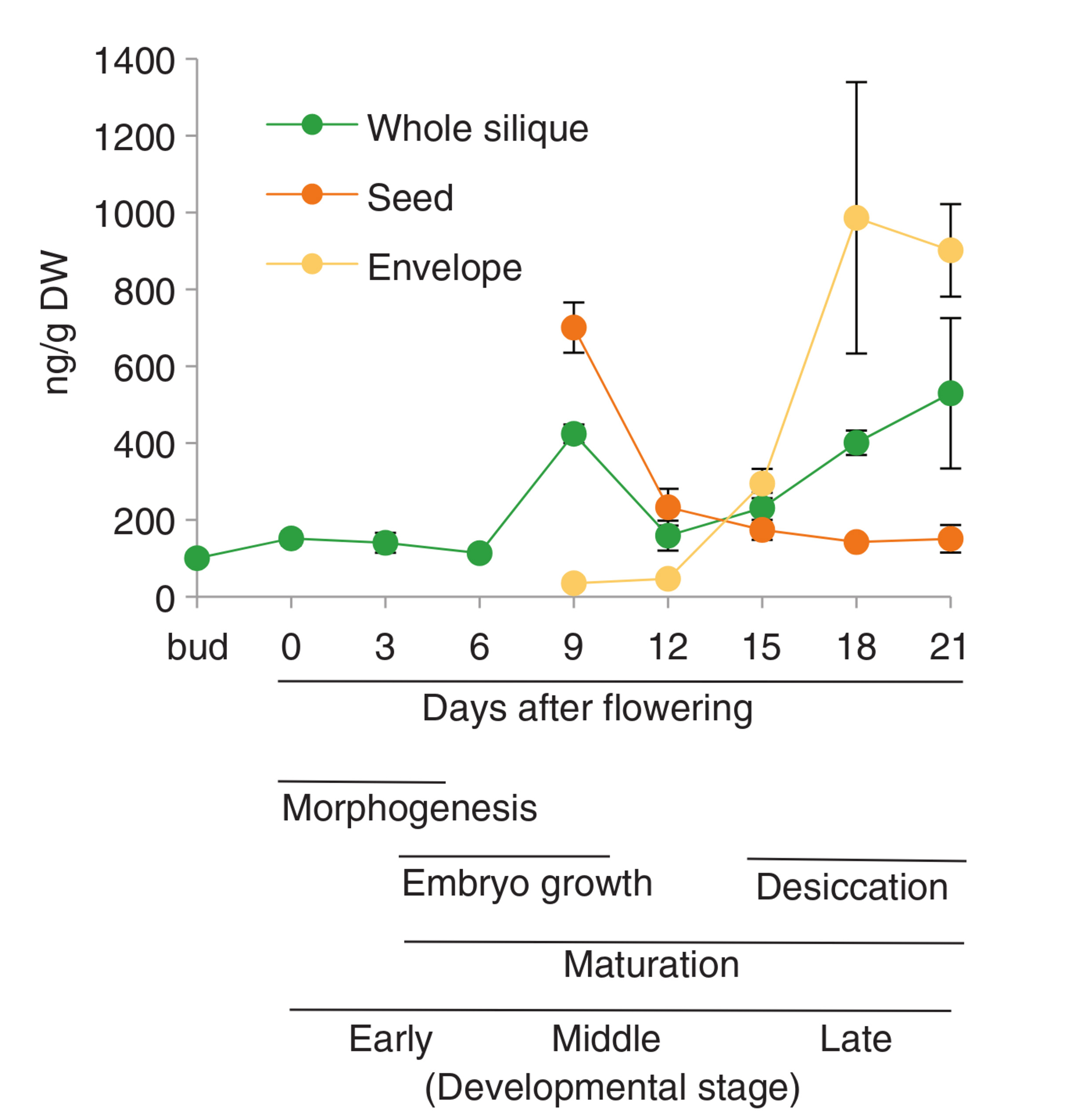
Figure 1. Abscisic acid (ABA) levels during wild-type seed development. ABA levels (ng/g DW) in wild-type flower buds (bud), flowers (0 days after flowering, DAF), whole siliques (3, 6, 9, 12, 15, 18, and 21 DAF), seeds (9, 12, 15, 18, and 21 DAF) and silique envelopes (9, 12, 15, 18, and 21 DAF) were analyzed. Values are the means ± SD of three biological replicates. Developmental events corresponding to DAF are indicated below the graph. Reproduced with permission from Kanno et al. [5].
Materials and reagents
Biological materials
1. Arabidopsis thaliana Columbia-0 wild type or transgenic seeds/plants
Reagents
1. Phosphate-buffered saline (PBS), powder (Biosharp, catalog number: BL601A)
2. Agar (Coolaber, catalog number: CA1331)
3. Sucrose (HUSHI SCR, catalog number: 57-50-1, F.W.342.3)
4. NaOH (HUSHI SCR, catalog number: 1310-73-2, F.W.40.00)
5. 1/2 MS base salts powder (Coolaber, catalog number: PM1060-50L)
6. Sodium hypochlorite (XiLONG SCIENTIFIC, catalog number: 7681-52-9)
7. Sterile double-distilled water (ddH2O); autoclave ddH2O at 121°C and 15 psi for 20 min
Solutions
1. 1/2 MS solid culture medium (see Recipes)
2. 25% (v/v) sodium hypochlorite solution (see Recipes)
3. 10% (v/v) Triton X-100 (see Recipes)
4. 1× PBS (see Recipes)
Recipes
1. 1/2 MS solid culture medium (100 mL)
| Reagent | Final concentration | Quantity or volume |
|---|---|---|
| 1/2 MS base salts powder | 2.185 g/L | 0.2185 g |
| Sucrose | 10 g/L | 1 g |
| Agar powder | 6 g/L | 0.6 g |
Dissolve 0.2185 g of 1/2 MS base salts powder and 1 g of sucrose in 90 mL of ddH2O, adjust the pH to 5.8–5.9 with NaOH, and make up to 100 mL with ddH2O. Add 0.6 g of agar powder and then autoclave at 121 °C and 15 psi (approximately 103 kPa) for 20 min. Allow the medium to cool to approximately 50–60 °C at room temperature before adding the appropriate sterile antibiotic stock solution for selection. For example, for kanamycin-based selection, add sterile kanamycin stock solution to a final concentration of 25 mg/L and mix thoroughly to ensure even distribution.
2. 25% (v/v) sodium hypochlorite solution (5 mL)
| Reagent | Final concentration | Quantity or volume |
|---|---|---|
| Sodium hypochlorite | 156 mM | 1 mL |
| 10% (v/v) Triton X-100 | 1.53 mM | 0.05 mL |
Add 4 mL of ddH2O to 1 mL of sodium hypochlorite to adjust the volume to 5 mL, then add 50 μL of 10% (v/v) Triton X-100.
3. 10% (v/v) Triton X-100
| Reagent | Final concentration | Quantity or volume |
|---|---|---|
| Triton X-100 | 154 mM | 1 mL |
| 1× PBS solution | 10 mM | 9 mL |
Add 9 mL of 1× PBS solution to 1 mL of Triton X-100.
4. 1× PBS
| Reagent | Final concentration | Quantity or volume |
|---|---|---|
| PBS powder | 10 g/L | 10 g |
Dissolve the PBS powder in 1,000 mL of ddH2O and mix well.
Laboratory supplies
1.1.5 mL sterile centrifuge tube (Biosharp, catalog number: BS-15-M)
2. Fine pointed forceps (VETUS, catalog number: ST-11)
3. Anatomical needle
4. Parafilm (Bemis, catalog number: PM-996)
5. Sterile pipette tips (Biosharp, catalog number: BS-200-T, BS-1000-T)
6. 90-mm sterile culture dishes (Biosharp, catalog number: BS-90-D)
7. 100 mL conical flask (SHUNIU)
Equipment
1. Stereomicroscope (SOPTOP, model: SZN71)
2. Refrigerator (SIEMENS)
3. Centrifuge (Eppendorf, model: 5427R)
4. Autoclave (TOMY, model: SX-700)
5. 200 and 1,000 μL pipettes (Eppendorf)
6. Ultra-clean workbench (MEGSTEMAN scientific, model: MCB-1300VA9N)
7. Phase fluorescence microscope (ZEISS, model: HZFL-UBG-110-Z3)
8. Light-controlled constant temperature incubator (ZHUJIANG, model: LRH-1000-G)
Procedure
A. Preparation of culture media
1. Prepare 1/2 MS solid culture medium (see Recipe 1).
2. Pour the medium into sterile 90-mm Petri dishes under aseptic conditions.
3. Allow the medium to solidify, seal the plates with Parafilm, and store at 4 °C until use.
Note: Plates containing antibiotics should be protected from light and used within one week.
B. Identification and collection of immature seeds
1. At the early flowering stage (white bud stage), carefully open the flower bud with fine forceps and remove the sepals, petals, and all yellow stamens (emasculation), taking care not to damage the stigma. After 12–14 h, select freshly opened flowers from the pollen donor plants. Gently transfer pollen onto the stigma of the emasculated flower by lightly dabbing or brushing the stigma surface to ensure uniform pollen deposition. Mark each pollinated flower with colored thread or a fine-tip marker for subsequent identification and developmental staging.
2. Approximately 15 days after pollination (DAP), harvest siliques for immature seed isolation.
3. Harvest siliques when they exhibit the following characteristics:
a. The siliques remain plump and slightly yellow-green.
b. The valves have not completely dried.
c. Under a stereomicroscope, approximately 30%–40% of the seeds show the initial browning of the seed coat.
Note: Representative siliques and seeds at this developmental stage are shown in Figure 2.

Figure 2. Silique and seeds of Arabidopsis plants at approximately 15 days after pollination (DAP). The siliques (A) are plump, the silique valves are still slightly yellowish, and under transmitted light, the internal seeds (B) are just beginning to transition from green to brown. Scale bars, 1 mm.
4. Exclude siliques containing exclusively green seeds, as these embryos are generally immature.
5. Avoid using fully yellow or brittle siliques, which indicate advanced seed maturation and the onset of desiccation-induced dormancy (Figure 3).

Figure 3. Brittle silique of an Arabidopsis plant. Scale bar, 1 mm.
C. Seed isolation and surface sterilization
1. Transfer freshly harvested siliques onto the lid of a sterile Petri dish.
2. Under a stereomicroscope, carefully open the silique along the replum using a dissecting needle.
3. Gently separate the silique valves to expose the seeds.
4. Transfer seeds into a sterile 1.5-mL microcentrifuge tube using fine forceps.
5. Add 1 mL of freshly prepared 25% (v/v) sodium hypochlorite solution containing Triton X-100.
6. Surface-sterilize seeds for 4–5 min with gentle, constant shaking.
Critical: Do not exceed 6 min of sterilization, as prolonged exposure may reduce seed viability.
7. Centrifuge at 1,000× g for 1 min at room temperature.
8. Carefully remove the supernatant with a 1,000-μL micropipette, leaving the seeds undisturbed at the bottom of the tube.
9. Wash the seeds 3–4 times with sterile ddH2O, gently agitating the tube during each wash to completely remove residual sodium hypochlorite.
D. Cold treatment and germination
1. Suspend the sterilized seeds in sterile water.
2. Incubate the seeds in darkness at 4 °C for 2–3 days.
3. Distribute the stratified seeds evenly onto the corresponding 1/2 MS medium plates.
4. For selection of candidate homozygous T-DNA insertion mutant or transgenic lines, use medium supplemented with the appropriate antibiotic or herbicide (e.g., kanamycin at 25 mg/L for kanamycin-resistant lines).
5. Ensure that seeds are well separated to prevent overlapping during germination.
6. For GFP-based screening, examine seeds under a fluorescence stereomicroscope and mark GFP-positive seeds on the bottom of the plate (see Figure 4).
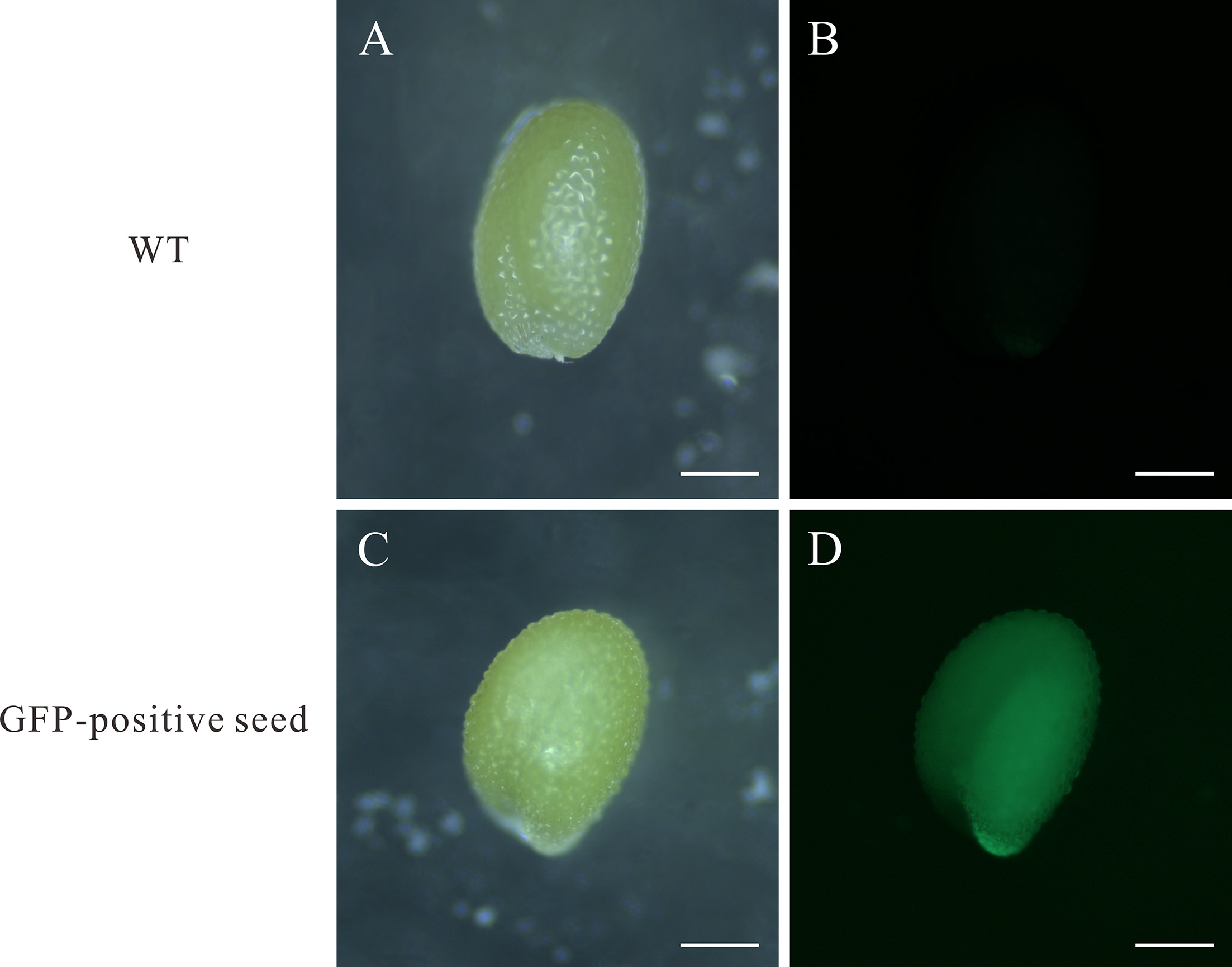
Figure 4. Observation of GFP fluorescence in T1 Arabidopsis seeds harvested at 15 days after pollination (DAP). (A) Brightfield image of a wild-type (WT) seed. (B) Fluorescence image of the corresponding WT seed, showing no detectable GFP signal. (C) Brightfield image of a GFP-positive seed. (D) Fluorescence image of the corresponding GFP-positive seed, showing a clear GFP signal. Scale bars, 150 μm.
7. Transfer the plates to a growth chamber maintained at 22 °C, under a 16/8 h light/dark photoperiod, with a light intensity of 100–120 μmol m-2·s-1 and 60% relative humidity.
Notes:
1. After 2 days of culture on 1/2 MS medium, the radicles of the seeds gradually emerge through the seed coat, indicating that seeds harvested at 15 DAP are capable of germination (see Figure 5).
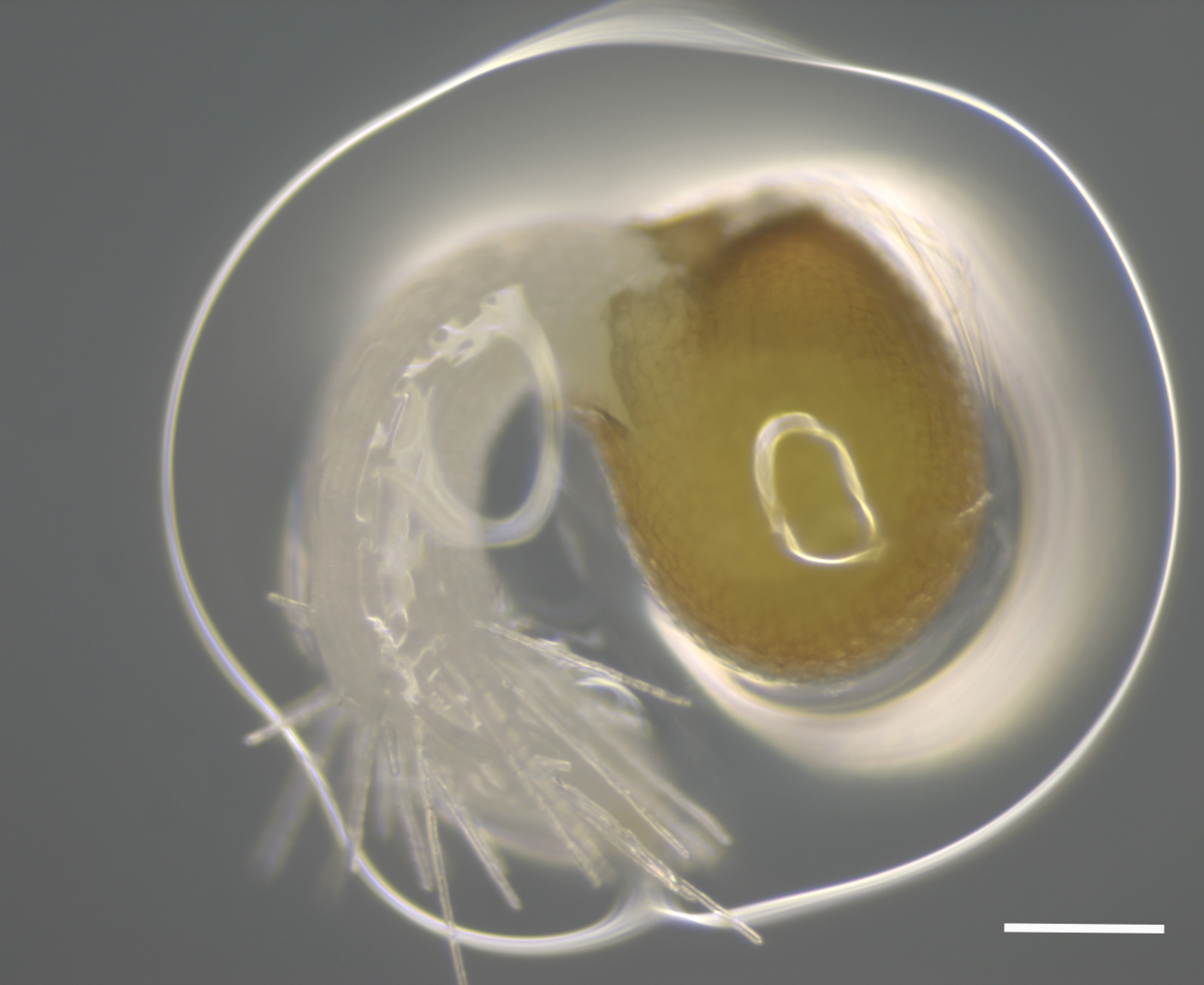
Figure 5. Radicle emergence through the seed coat after two days on 1/2 MS medium. Scale bar, 150 μm.
2. Approximately 95%–98% of seeds harvested at 15 DAP germinate on 1/2 MS medium following stratification. In contrast, seeds harvested at 10 DAP generally fail to germinate (see Table 1).
Table 1. Germination rates of seeds at different pollination days
| Seed age | Germination |
|---|---|
| 10 DAP | 0 |
| 15 DAP | 95–98 |
| Mature dry seed | 98–100 |
E. Seedling growth and transplantation
1. Maintain seedlings on 1/2 MS medium for approximately 7 days.
2. Select seedlings that exhibit normal cotyledon expansion, true leaf emergence, and healthy root development (see Figure 6).
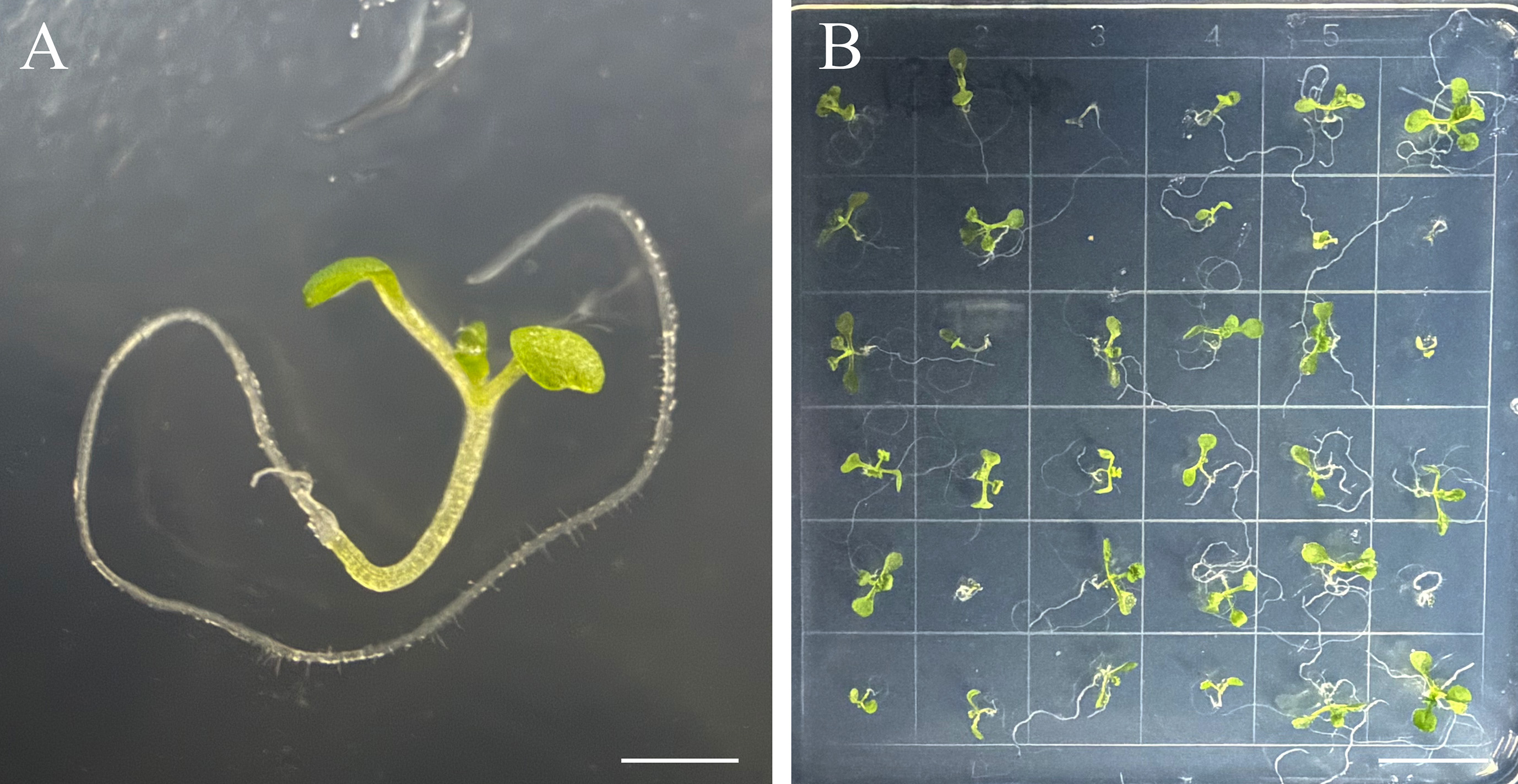
Figure 6. Seven-day seedlings on 1/2 MS medium. (A) Normal seedling. Scale bar, 1 mm. (B) Most seeds germinate and develop into normal seedlings. Scale bar, 1 cm.
3. For selection experiments, identify resistant seedlings at this stage. Kanamycin-resistant seedlings develop expanded green cotyledons and elongated primary roots, whereas kanamycin-sensitive seedlings exhibit bleached cotyledons and arrested root growth (see Figure 7).
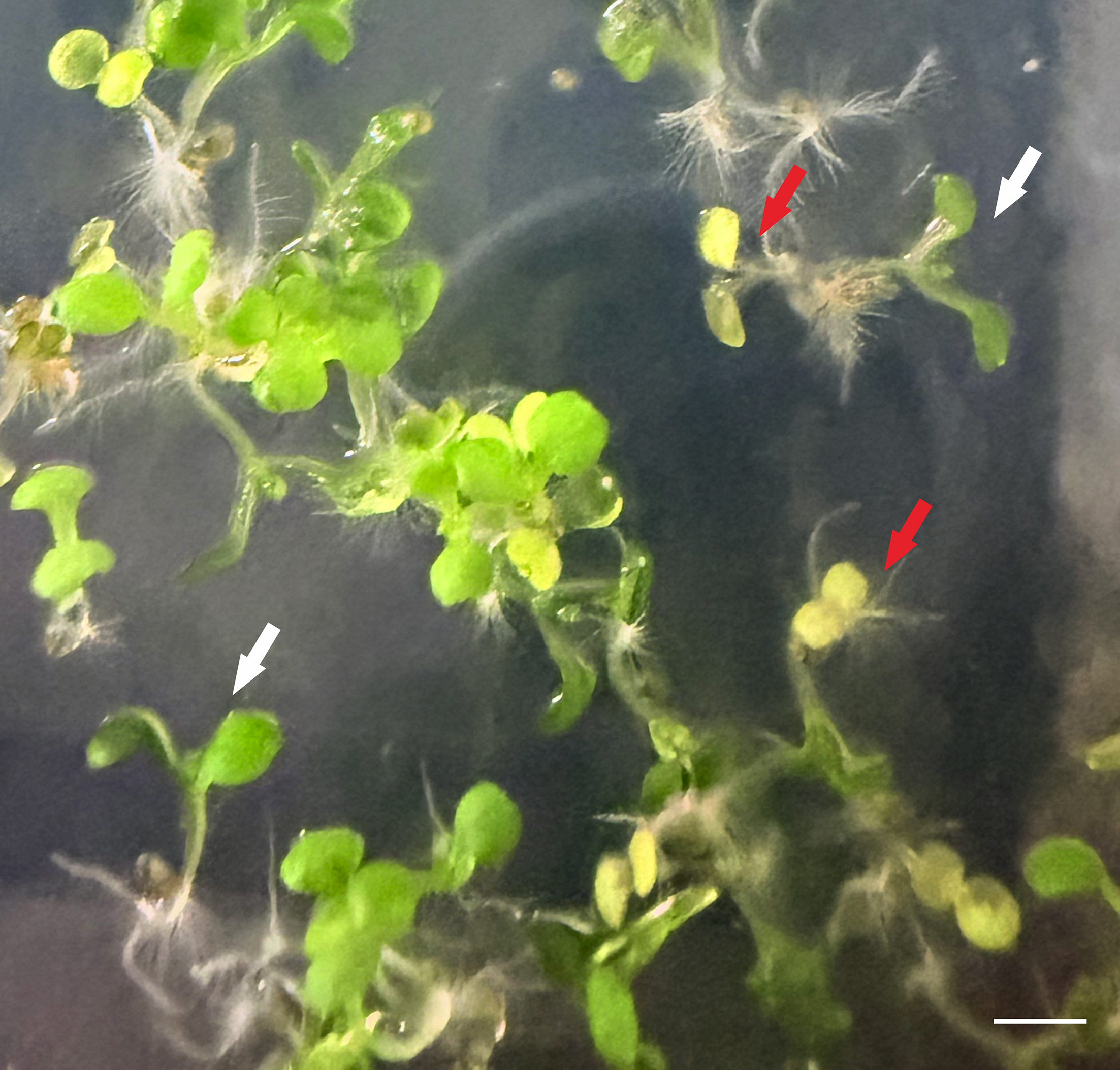
Figure 7. Representative kanamycin selection of seedlings derived from 15-days-after-pollination (DAP) seeds. Kanamycin-resistant seedlings show green cotyledons and elongated roots (white arrows), whereas kanamycin-sensitive seedlings exhibit bleached cotyledons and arrested growth (red arrows). Scale bar, 2 mm.
4. Carefully transfer selected seedlings to the soil.
5. Grow plants under standard greenhouse conditions until flowering and seed production.
6. Two to three weeks after transplantation, extract genomic DNA from the leaves and confirm the homozygosity of the T-DNA insertion mutant lines and transgenic lines by PCR. Newly formed siliques are typically produced 4–5 weeks after transplantation.
Note: Plants derived from 15-DAP seeds are phenotypically indistinguishable from plants grown from conventionally matured seeds (see Figure 8).
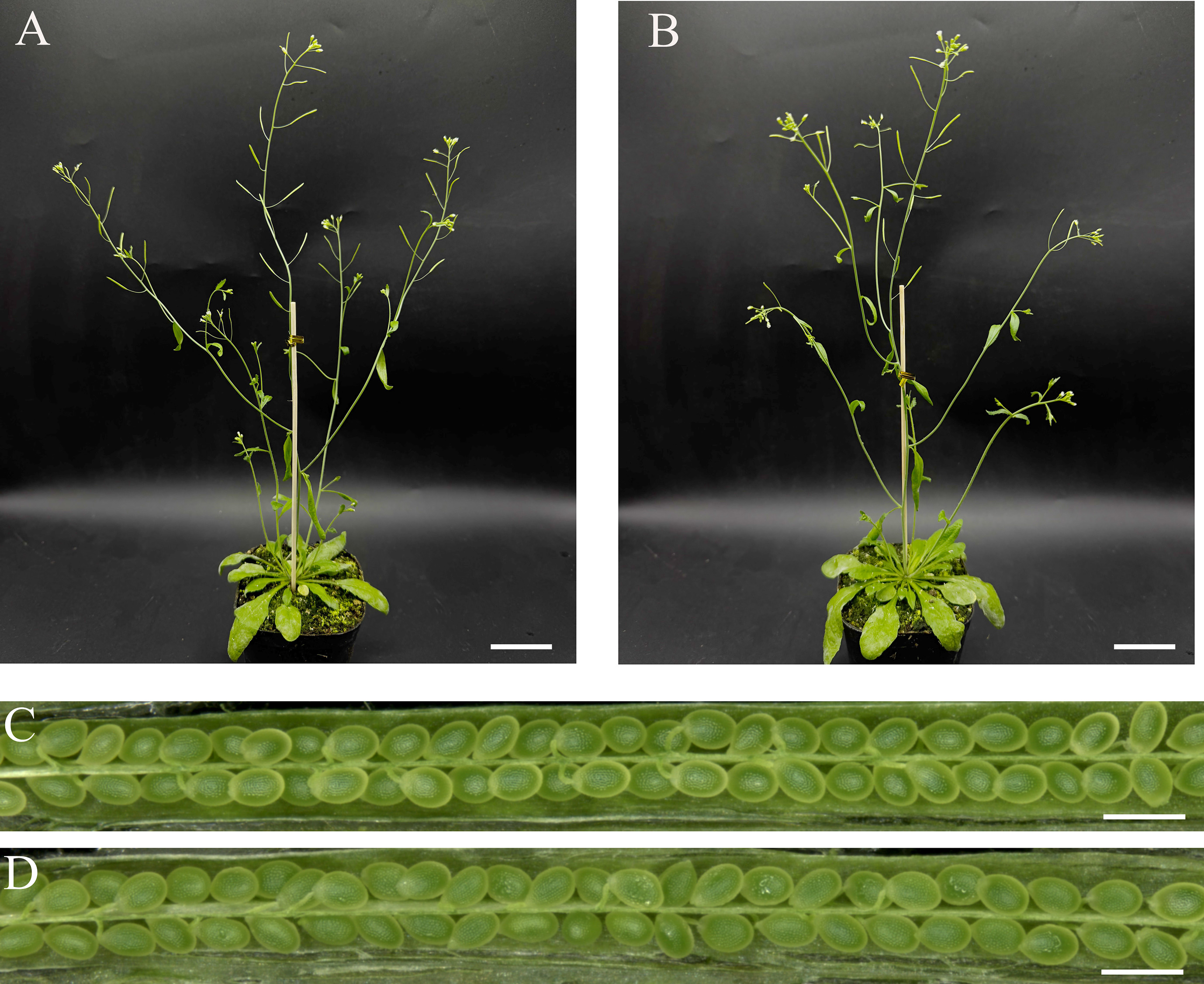
Figure 8. Indistinguishable observations between plants grown from seeds harvested at 15 days after pollination (DAP) and from normally dried seeds. (A) Plant grown from normally dried seed. (B) Plant grown from 15-DAP seeds. Scale bar, 4 cm. (C) Ovules produced by plants grown from normally dried seeds. (D) Ovules produced by plants grown from 15-DAP seeds. Scale bar, 1 mm.
Data analysis
The germination rate is calculated using the following equation:
Germination rate (%) = (Number of germinated seeds/Total number of seeds plated) × 100
For each developmental stage, at least three biological replicates are recommended, with a minimum of 100 seeds per replicate.
General notes and troubleshooting
General notes
1. The success of this protocol critically depends on the accurate determination of the seed developmental stage. To achieve a high germination rate, young seeds at the optimal developmental window should be selected from developing siliques based on the number of days after pollination.
2. Seeds harvested too early (<13 DAP) generally contain immature embryos and exhibit poor germination. In contrast, seeds harvested too late (>17 DAP) may have already entered desiccation-induced dormancy, thereby reducing the time-saving advantage of the protocol.
3. Harvesting seeds at 15 DAP represents the optimal developmental window for this protocol. However, minor adjustments (±1–2 days) may be necessary depending on the genotype and growth conditions. The appropriate developmental stage can be identified by the appearance of the siliques, which are slightly yellowish, while approximately 30%–40% of the seeds show the initial browning of the seed coat.
4. Surface sterilization for longer than 6 min can significantly reduce seed viability and germination rates.
5. To ensure reliable results, it is recommended to evaluate at least 50–100 seeds per experimental batch.
6. For GFP-based screening, fluorescence observation is best performed prior to seed sowing or marked for future screening in the plates under GFP stereomicroscope observation.
7. Stratification at 4 °C for 2–3 days is strongly recommended to promote uniform germination.
8. This protocol is suitable for accelerating the identification of homozygous T-DNA insertion mutants and fluorescently labeled transgenic lines.
9. All procedures following seed sterilization should be carried out under sterile conditions in a laminar-flow hood.
10. For mutants with altered seed maturation or dormancy phenotypes (e.g., those affecting ABA or GA pathways), optimization of the harvesting stage may be required before routine application of this protocol.
11. This protocol is designed to accelerate the identification of candidate homozygous plants and does not replace molecular confirmation of homozygosity when required. PCR-based genotyping remains the recommended approach for definitive validation of T-DNA insertion lines or other genetically modified lines.
Validation of protocol
This protocol has been validated through more than 30 independent rounds of screening. In each round, approximately 100 seeds collected at the defined developmental stage were used for subsequent screening based on antibiotic resistance and GFP-assisted selection. Seeds carrying the resistance-selection marker consistently exhibited a germination rate of up to 98% under the corresponding selection conditions.
The reliability and reproducibility of this protocol were further confirmed through three independent experiments, in which 150-200 seeds from both the experimental group (15 DAP) and control group (mature dry seed) were analyzed in each replicate. The mean germination rate of 15-DAP seeds was 96.70% ± 1.30%, while mature dry seeds exhibited a mean germination rate of 98.72% ± 1.19% (mean ± SD, n = 3 biological replicates), with no significant differences (P > 0.05) (see Figure 9). Consistent results were obtained across all experiments, indicating the young seeds in 15-DAP siliques can be directly used for next-generation screening. In addition, this protocol has been widely adopted by multiple members of our research group for the identification of homozygous transgenic Arabidopsis plants, substantially reducing the time required for conventional homozygous line screening.
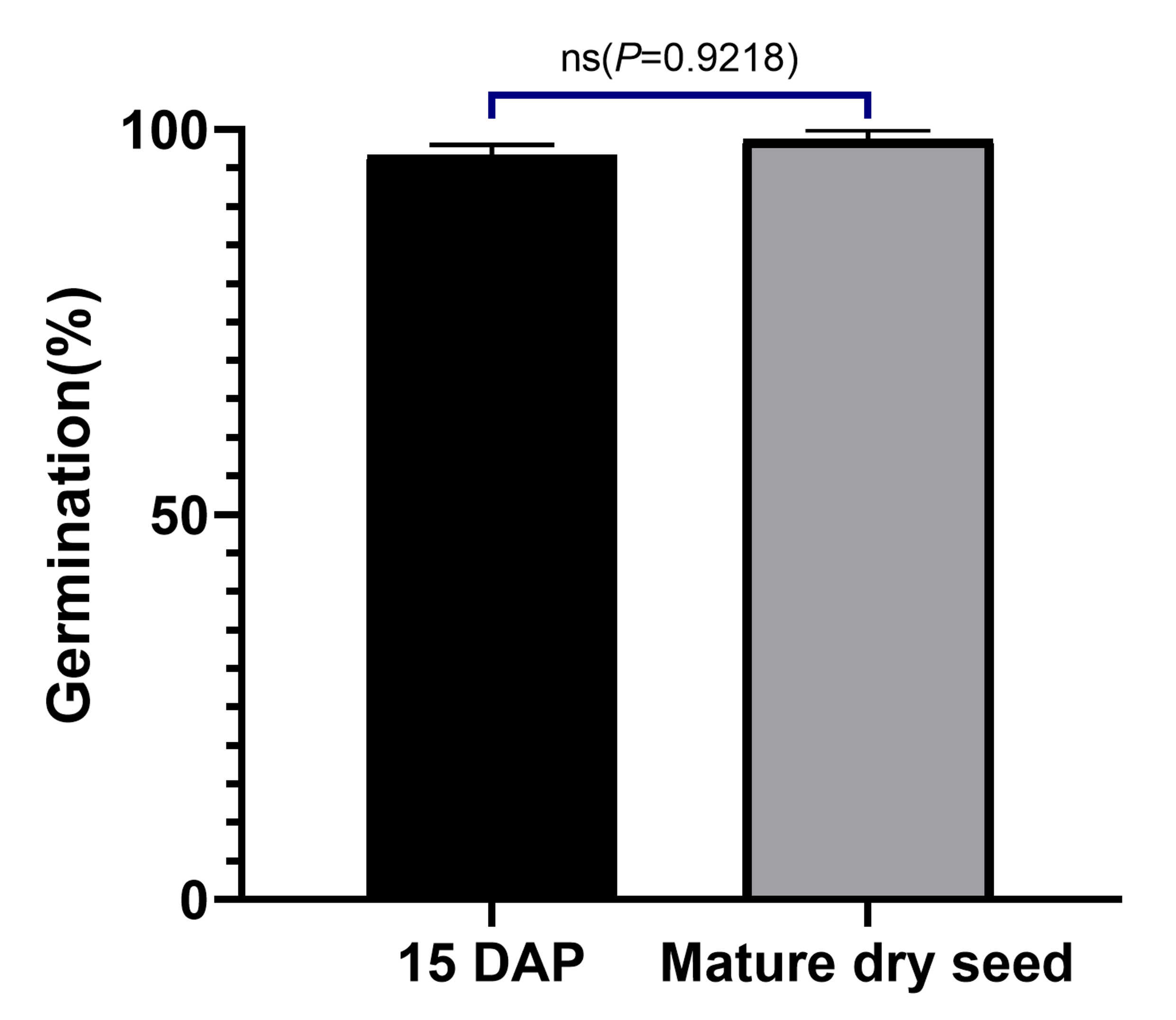
Figure 9. Validation of the germination efficiency of 15-days-after-pollination (DAP) seeds and mature dry seeds. The error bars represent mean ± SD from three independent biological replicates (n = 3), with 150–200 seeds analyzed per replicate. Statistical significance was determined using an unpaired two-tailed Student’s t-test. ns, not significant (P = 0.9218, P > 0.05).
Acknowledgments
Funded by the National Natural Science Foundation of China (grant number: 32270364).
Author contributions
Conceptualization, G.Y., Q.Z., Y.W.; Investigation, Q.Z., Y.W., G.Y., C.J., X.Z., W.Z.; Writing—Original Draft, Q.Z., Y.W., G.Y.; Writing—Review & Editing, G.Y., Q.Z., Y.W., C.J., X.Z., W.Z.; Funding acquisition, G.Y.; Supervision, G.Y.
Competing interests
The authors declare no competing interests.
References
- Kucera, B., Cohn, M. A. and Leubner-Metzger, G. (2005). Plant hormone interactions during seed dormancy release and germination. Seed Sci Res. 15(4): 281–307. https://doi.org/10.1079/ssr2005218
- Nelson, S. K., Kanno, Y., Seo, M. and Steber, C. M. (2023). Seed dormancy loss from dry after-ripening is associated with increasing gibberellin hormone levels in Arabidopsis thaliana. Front Plant Sci. 14: e1145414. https://doi.org/10.3389/fpls.2023.1145414
- Karssen, C. M. (2017). Hormonal Regulation of Seed Development, Dormancy, and Germination Studied by Genetic Control. In Seed Development and Germination. pp. 333–350. https://doi.org/10.1201/9780203740071-12
- Debeaujon, I. and Koornneef, M. (2000). Gibberellin Requirement for Arabidopsis Seed Germination Is Determined Both by Testa Characteristics and Embryonic Abscisic Acid. Plant Physiol. 122(2): 415–424. https://doi.org/10.1104/pp.122.2.415
- Kanno, Y., Jikumaru, Y., Hanada, A., Nambara, E., Abrams, S. R., Kamiya, Y. and Seo, M. (2010). Comprehensive Hormone Profiling in Developing Arabidopsis Seeds: Examination of the Site of ABA Biosynthesis, ABA Transport and Hormone Interactions. Plant Cell Physiol. 51(12): 1988–2001. https://doi.org/10.1093/pcp/pcq158
Article Information
Publication history
Received: Jun 6, 2026
Accepted: Aug 6, 2026
Available online: Sep 3, 2026
Published: Sep 20, 2026
Copyright
© 2026 The Author(s); This is an open access article under the CC BY-NC license (https://creativecommons.org/licenses/by-nc/4.0/).
How to cite
Zhang, Q., Wang, Y., Jiang, C., Zhou, X., Zhong, W. and Yu, G. (2026). A Protocol for Accelerating Homozygous Line Screening in Arabidopsis thaliana. Bio-protocol 16(18): e5819. DOI: 10.21769/BioProtoc.5819.

 Download Citation in RIS Format
Category
Plant Science > Plant breeding > Cultivation technique
Plant Science > Plant molecular biology > Genetic analysis
Plant Science > Plant physiology > Plant growth
Do you have any questions about this protocol?
Post your question to gather feedback from the community. We will also invite the authors of this article to respond.
 Post a Question


