


- Protocols

- Articles and Issues
- For Authors
- About
- Become a Reviewer


TALENs and Related Technologies for Editing Nuclear and Organellar Genomes in a Model Plant, Arabidopsis thaliana

Published: Vol 16, Iss 9, May 5, 2026 DOI: 10.21769/BioProtoc.5668 Views: 505
Reviewed by: Samik BhattacharyaDeepti M NambiarYue Xi
 PDF
PDF  Ask a question
Original research article
The authors used this protocol in:

Dec 2020
Advertisement



Protocol Collections
Comprehensive collections of detailed, peer-reviewed protocols focusing on specific topics



Related protocols
Abstract
Plant genome editing is a powerful approach for modifying plant DNA to investigate gene function and to engineer desirable traits. Several genome-editing technologies have been developed, among which CRISPR/Cas systems and transcription activator-like effector nucleases (TALENs) are widely used to introduce targeted double-stranded DNA breaks. While CRISPR/Cas systems are highly efficient for nuclear genome editing, their application to plant organellar genomes remains limited, largely due to difficulties in guide RNA delivery into mitochondria and chloroplasts. Here, we present a detailed and reproducible protocol for constructing TALEN-based binary vectors for targeted genome editing in Arabidopsis thaliana. This protocol describes the assembly of TALE repeat arrays, the generation of nuclear-, mitochondrial-, and plastid-targeted TALEN expression vectors using MultiSite Gateway cloning, and subsequent Agrobacterium-mediated plant transformation and genotyping. The workflow enables the production of nTALENs, mitoTALENs, and ptpTALENs using a unified vector design strategy. In addition, the protocol briefly outlines the construction principles of TALE-based cytidine deaminases (TALECDs) for targeted C-to-T base editing in plant organellar genomes. The protocol provides a flexible and robust framework for plant nuclear and organellar genome editing and can be readily adapted to different target genes and experimental purposes. Its modular design and compatibility with standard molecular cloning techniques make it accessible to laboratories aiming to perform precise genome manipulation in plants.
Key features
• Requires experience in basic molecular cloning and Arabidopsis transformation; suitable for laboratories performing plant nuclear and organellar genome editing.
• Enables construction of nuclear-, mitochondrial-, and plastid-targeted TALENs using a unified MultiSite Gateway–based vector system.
• Provides a modular workflow for assembling large TALEN binary vectors compatible with Agrobacterium-mediated transformation in Arabidopsis thaliana.
• Includes optional extension to TALE-based cytidine deaminases for targeted C-to-T base editing in plant mitochondrial and plastid genomes.
Keywords: TALEN Plant genome editing
Organelle genome editing
Mitochondria
Chloroplast
Arabidopsis thaliana
TALECD
Binary vector construction
Plant genome editing
Organelle genome editing
Mitochondria
Chloroplast
Arabidopsis thaliana
TALECD
Binary vector construction
Graphical overview
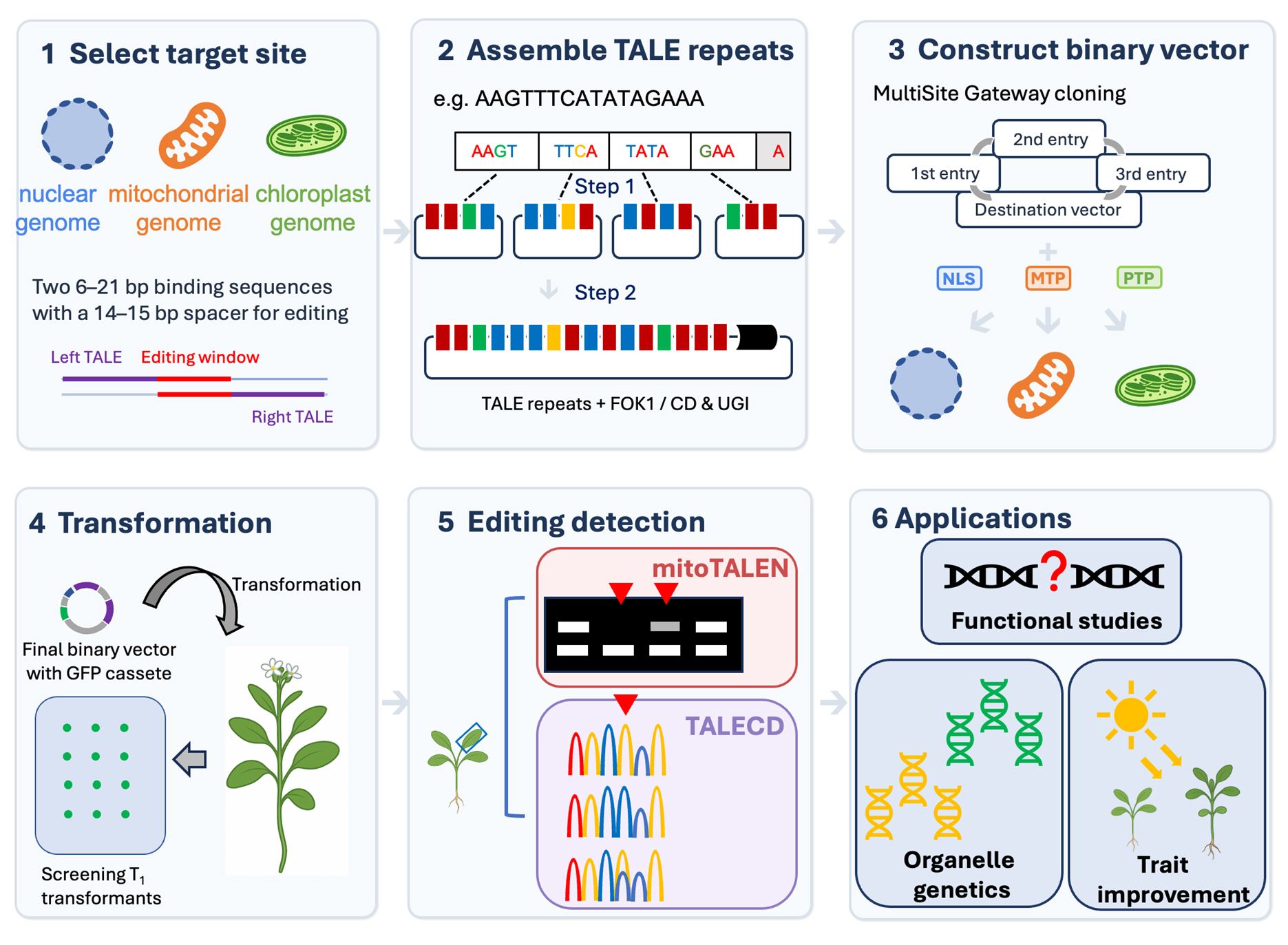
Background
Precise manipulation of plant genomes is a central approach for elucidating gene function and for engineering traits of agronomic importance. In plants, in addition to the nuclear genome, mitochondria and chloroplasts possess their own genomes, which play essential roles in energy metabolism, photosynthesis, and organelle–nucleus communication. However, targeted modification of plant organellar genomes has long remained technically challenging, limiting functional studies of organelle-encoded genes.
Several genome-editing technologies have been developed for plant nuclear genomes, among which CRISPR/Cas-based systems are currently the most widely used. Although highly efficient for nuclear genome editing, CRISPR/Cas systems have not yet been successfully applied to plant mitochondrial or chloroplast genomes, largely due to the difficulty of importing guide RNAs into these organelles. In contrast, transcription activator-like effector nucleases (TALENs), which function as programmable DNA-binding proteins fused to a nuclease domain, do not rely on RNA components and can therefore be targeted to plant organelles by appropriate localization signals. TALEN-based approaches have thus emerged as a practical strategy for targeted genome editing in plant mitochondria and plastids.
The protocol described here provides a unified workflow for constructing TALEN-based binary vectors for nuclear, mitochondrial, and plastid genome editing in Arabidopsis thaliana. Compared with previously described TALEN assembly methods, this protocol integrates platinum gate–based TALE repeat assembly with MultiSite Gateway cloning to facilitate the generation of large, modular Ti plasmids suitable for Agrobacterium-mediated transformation. Platinum TALENs use an optimized repeat scaffold that incorporates non-RVD variations (repeatvariable diresidue; the two amino acids in each TALE repeat that specify DNAbase recognition) to improve overall TALEN activity and robustness without changing base recognition. In contrast, conventional Golden Gate TALENs typically assemble largely uniform standard repeats that differ mainly at the RVD positions, which can result in more variable performance. The use of a common vector architecture allows efficient production of nTALENs, mitoTALENs, and ptpTALENs with minimal modification, improving reproducibility and reducing the technical barrier for laboratories aiming to perform organellar genome editing.
Despite these advantages, the protocol also has inherent limitations. TALEN assembly and cloning require multiple molecular cloning steps and careful verification of large plasmids, which can be time-consuming compared with CRISPR/Cas-based approaches for nuclear genome editing. In addition, editing efficiency may vary depending on target sequence features and organelle genome context. Nevertheless, for applications where RNA-guided systems are not feasible, particularly in plant mitochondria and chloroplasts, TALEN-based strategies currently represent one of the most reliable options.
Beyond targeted gene disruption, the modular design of this protocol enables extension to other TALE-based genome engineering tools. In particular, the same framework can be adapted for constructing TALE-based cytidine deaminases (TALECDs) for targeted C-to-T base editing in plant organellar genomes. As a result, this protocol can support a broad range of applications, including functional analysis of organelle-encoded genes, investigation of organellar genome stability, and development of new strategies for organelle genome engineering in plants.
Materials and reagents
Biological materials
1. Arabidopsis thaliana ecotype Columbia-0 (Col-0) (origin: laboratory stock)
2. Agrobacterium tumefaciens strain C58C1 (origin: laboratory stock)
3. Escherichia coli DH5α competent cells (Takara, Japan)
4. Escherichia coli HST08P Premium competent cells (Takara, Japan)
Reagents
1. Platinum Gate TALEN kit (Addgene, catalog number: 1000000043)
2. GatewayTM LR ClonaseTM II enzyme mix (Invitrogen, catalog number: 11791100)
3. Murashige and Skoog (MS) plant salt mixture (Shioya MS Co., Ltd., catalog number: S191)
4. MES [2-(N-morpholino) ethanesulfonic acid] (Dojindo Laboratories Co., Ltd., catalog number: 345-01625)
5. Sucrose (FUJIFILM Wako Pure Chemical Corporation, catalog number: 190-00013)
6. Agar (for plant tissue culture) (FUJIFILM Wako Pure Chemical Corporation, catalog number: 010-15815)
7. Plant preservative mixture (PPM) (Plant Cell Technology, catalog number: PPM-100)
8. Claforan (cefotaxime sodium) (FUJIFILM Wako Pure Chemical Corporation, catalog number: 030-16113)
9. Spectinomycin (Sigma-Aldrich, catalog number: S9007)
10. Kanamycin (FUJIFILM Wako Pure Chemical Corporation, catalog number: 113-00343)
11. Proteinase K solution (Invitrogen, catalog number: 25530049)
12. KOD OneTM PCR master mix (TOYOBO, catalog number: KMM-201X5)
13. Quick Ligation kit (New England Biolabs, catalog number: M2200S)
14. BsaI-HFv2 (New England Biolabs, catalog number: R3733S)
15. Esp3I (BsmBI) (Thermo Fisher Scientific, catalog number: ER0452)
16. IPTG (Isopropyl-β-D‑thiogalactopyranoside), dioxane‑free (TaKaRa, catalog number: 9030)
17. X‑Gal (5-bromo-4-chloro-3-indolyl-β‑D-galactopyranoside) (Free S, catalog number: 510‑620‑G005‑X‑Gal)
18. N,N-dimethylformamide (DMF) (Fujifilm Wako, catalog number: 049‑02914)
19. TangoBuffer (10×) (Thermo Fisher Scientific, catalog number: BY5)
20. (±)-Dithiothreitol (DTT) solution (Fujifilm Wako, catalog number: 044-33871)
Solutions
1. 1/2 Murashige and Skoog (MS) medium (see Recipes)
2. Plant very rapid PCR isolation buffer (see Recipes)
3. LB liquid medium (see Recipes)
4. LB solid medium (see Recipes)
5. SOC medium (see Recipes)
6. Gamborg’s vitamin solution (1,000×) (see Recipes)
7. 0.1 M IPTG solution (see Recipes)
8. 20 mg/mL X-Gal solution (see Recipes)
Recipes
1. 1/2 MS medium
| Reagent | Final concentration | Quantity or volume |
|---|---|---|
| MS plant salt mixture | 2.3 g/L | 2.3 g |
| MES | 0.5 g/L | 0.5 g |
| Sucrose | 10 g/L | 10 g |
| Gamborg’s vitamin solution | 1 mL/L | 1 mL |
| Plant preservative mixture | 1 mL/L | 1 mL |
| Agar | 5 g/L | 5 g |
| Distilled water | n/a | To 1 L |
| Total | n/a | 1 L |
Adjust pH to 5.7 using KOH or HCl before autoclaving. Store prepared medium at 4 °C in the dark and use within 2–4 weeks.
2. Plant very rapid PCR isolation buffer
| Reagent | Final concentration | Quantity or volume |
|---|---|---|
| Tris-HCl (pH 9.5) | 0.1 M | 10 mL of 1 M stock |
| EDTA (pH 8.0) | 5 mM | 0.5 mL of 100 mM stock |
| Distilled water | n/a | to 100 mL |
| Total | n/a | 100 mL |
Store at 4 °C for up to 6 months.
3. LB liquid medium
| Reagent | Final concentration | Quantity or volume |
|---|---|---|
| Tryptone | 10 g/L | 10 g |
| Yeast extract | 5 g/L | 5 g |
| NaCl | 10 g/L | 10 g |
| Distilled water | n/a | to 1 L |
| Total | n/a | 1 L |
Sterilized LB broth can be stored at room temperature or 4 °C and used within 1–3 months.
4. LB solid medium
| Reagent | Final concentration | Quantity or volume |
|---|---|---|
| LB liquid medium | n/a | 1 L |
| Agar | 15 g/L | 15 g |
| Total | n/a | 1 L |
Autoclave and cool to ~55 °C before adding antibiotics if required. Store poured plates at 4 °C (sealed) and use within 2–4 weeks; when antibiotics are added, use within 1–2 weeks.
5. SOC medium
| Reagent | Final concentration | Quantity or volume |
|---|---|---|
| Tryptone | 20 g/L | 20 g |
| Yeast extract | 5 g/L | 5 g |
| NaCl | 10 mM | 0.58 g |
| KCl | 2.5 mM | 0.19 g |
| MgCl2 | 10 mM | 10 mL of 1 M stock |
| MgSO4 | 10 mM | 10 mL of 1M stock |
| Glucose | 20 mM | 3.6 g |
| Distilled water | n/a | To 1 L |
| Total | n/a | 1 L |
Add glucose, MgCl2, and MgSO4 after autoclaving using sterile-filtered stock solutions. Store SOC medium at 4 °C and use within 4 weeks.
6. Gamborg’s vitamin solution (1,000×)
| Reagent | Final concentration | Quantity or volume |
|---|---|---|
| myo-Inositol | 100 g/L | 10 g |
| Glycine | 2 g/L | 200 mg |
| Nicotinic acid | 0.5 g/L | 50 mg |
| Pyridoxine-HCl | 0.5 g/L | 50 mg |
| Thiamine-HCl | 0.1 g/L | 10 mg |
| Distilled water | n/a | To 100 mL |
| Total | n/a | 100 mL |
Filter-sterilize (0.22 μm), aliquot (e.g., 15 mL tubes), and store at -20 °C. Avoid repeated freeze–thaw cycles; aliquots are stable for up to 12 months at -20 °C.
7. 0.1 M IPTG solution
| Reagent | Final concentration | Quantity or volume |
|---|---|---|
| IPTG | 0.1 M | 0.238 g |
| Ultrapure water | n/a | To 10 mL |
| Total | n/a | 10 mL |
Sterilize using a Terumo 10 mL syringe and a Millex-LG 0.20 μm filter in a laminar flow cabinet. Store for ≤6 months at -20 °C.
8. 20 mg/mL X-Gal solution
| Reagent | Final concentration | Quantity or volume |
|---|---|---|
| X-gal | 20 mg/mL | 200 mg |
| DMF | n/a | To 10 mL |
| Total | n/a | 10 mL |
Store for ≤ 6 months at -20 °C.
Laboratory supplies
1. 0.2 mL PCR 8-strip tubes with dome caps (Nippon Genetics Co., Ltd., catalog number: FG-028DC)
2. 0.2 mL PCR single tubes with dome caps (Nippon Genetics Co., Ltd., catalog number: FG-021D)
3. MicroAmpTM Fast 96-well reaction plates (0.1 mL) (Applied Biosystems, catalog number: 4369074)
4. 1.5 mL microcentrifuge tubes (SARSTEDT, catalog number: 72.41154.000)
5. 2.0 mL microcentrifuge tubes (TPP Techno Plastic Products AG, catalog number: 89020)
6. 50 mL conical centrifuge tubes, sterile (CELLSTAR®, Greiner Bio-One, catalog number: 227261)
7. 15 mL conical centrifuge tubes, sterile (CELLSTAR®, Greiner Bio-One, catalog number: 188271)
8. Disposable nitrile gloves (Kawanishi Industry Co., Ltd., QUICK FIT series)
9. Autoclave bags (IWAKI Co., Ltd., catalog number: A-BAG950)
10. Filter pipette tips (10, 200, and 1,000 μL) (Greiner Bio-One, catalog numbers: 771265, 738265, 750265)
11. Terumo syringe 10 mL for vaccination slip tip (TERUMO, catalog number: SS10ESZ)
12. Millex-LG 0.20 μm filter (Merck, catalog number: SLLG025SS)
Equipment
1. Thermal cycler (PCR machine) (Applied Biosystems, Thermo Fisher Scientific, model: MiniAmpTM Plus Thermal Cycler or equivalent)
2. Microcentrifuge (Benchmark Scientific, model: myFugeTM Mini Centrifuge or equivalent)
3. Refrigerated centrifuge (TOMY Seiko Co., Ltd., model: MDX-310 or equivalent)
4. Incubator shaker for bacterial culture (TAITEC Corporation, model: BioShaker BR-43FL or equivalent)
5. Dry incubator for bacterial plate incubation (37 °C) (Yamato Scientific Co., Ltd., model: IC402 or equivalent)
6. Laminar flow hood/clean bench (NK System Co., Ltd. or equivalent)
7. Plant growth chamber (NK System Co., Ltd., model: BioTRON growth chamber or equivalent)
8. Gel electrophoresis system and power supply (ADVANCE Co., Ltd. or equivalent)
9. UV or blue-light transilluminator (ATTO Corporation, model: CyanoView III or equivalent)
10. Stereo fluorescence microscope for screening GFP-positive seeds (Olympus Corporation, MVX10 MacroView fluorescence microscope equipped with a DP73 digital camera and U-RFL-1 fluorescence light source or equivalent)
11. Spectrophotometer for DNA quantification (Thermo Fisher Scientific, model: NanoDropTM One C or equivalent)
12. Autoclave (TOMY Seiko Co., Ltd., model: LSX-500 or equivalent)
Software and datasets
1. Geneious Prime (Biomatters, version 2020 or later; commercial software); https://www.geneious.com (accessed December 29, 2025)
2. BLAST (Basic Local Alignment Search Tool) (National Center for Biotechnology Information; free to use); https://blast.ncbi.nlm.nih.gov/Blast.cgi (accessed December 29, 2025)
3. Old TALEN Targeter (Cornell University; web-based tool; free to use); https://tale-nt.cac.cornell.edu/node/add/talen-old (accessed December 29, 2025)
Procedure
A. Target site selection for TALEN-mediated editing
1. Identify the target gene or genomic region to be edited in Arabidopsis thaliana. When the goal is to generate a loss-of-function allele, we recommend selecting target sites within early constitutive exons (preferably toward the 5′ region of the coding sequence) to maximize the likelihood of disrupting protein function. Targeting regions close to the C-terminus may still allow production of partially functional truncated proteins; therefore, such sites should be avoided unless a C-terminal truncation is specifically desired. For organellar genes, target sites should also be chosen in unique regions and away from large repeats to reduce unintended recombination.
2. Design two target sequences (6–21 bp each) for binding by the TALE domains. A spacer length of 14–15 bp between the left and right TALE arrays binding sites is recommended to ensure efficient cleavage or base-editing activity.
3. Re-evaluate predicted candidate sequences by BLAST analysis against the Arabidopsis genome to ensure target specificity and minimize potential off-target effects. Candidate TALEN binding sequences were evaluated using NCBI BLASTN against the Arabidopsis thaliana genome (TAIR10) using the megablast algorithm with default parameters. Hits other than the intended target with ≤3 mismatches across the full binding sequence were considered potential off-targets, and such candidate sites were excluded.
Note: The first recognized base is preferably placed adjacent to a thymine (T) at the 3′ side to improve DNA-binding efficiency, although other configurations are also functional.
B. Construction of vectors of TALE repeats
Assemble TALE repeat vectors using the Platinum Gate TALEN kit [1]. To clarify how the target sequence modules were used to design TALE repeats, a TALE DNA-binding array is composed of tandem repeats, each typically 34 amino acids in length and encoded by a 102-bp sequence. Each repeat recognizes one nucleotide in the target DNA, and nucleotide specificity is primarily determined by the repeat-variable diresidue (RVD) at positions 12 and 13 of the repeat. In this study, we used the standard RVD code (e.g., NI for A, HD for C, NG for T, and NN for G) to translate each nucleotide of the desired binding sequence into the corresponding TALE repeat unit. Thus, by assembling repeats in the same 5′→3′ order as the target binding site, we generated TALE arrays that specifically bind the intended DNA sequence.
For functional genome editing, the assembled TALE arrays were fused to an effector domain: either the FokI nuclease domain (for mitoTALEN/TALEN architectures) or a cytidine deaminase (CD) domain (for TALE-based cytidine deamination editors). Upon TALE binding to the target site, the fused nuclease or deaminase acts within the spacer/target region, enabling sequence modification within the defined editing window. Left and right TALE repeat vectors were assembled, consisting of two steps in total. Figure 1 shows the two steps to assemble the left TALE repeats with the DNA binding sequence “AAGTTTCATATAGAAA.” The assembly process for the right TALE repeats is the same as for the left TALE repeats, except that in the second assembly step, vectors with specific recombination sites attL3 and attL2 (Figure 1C) are used instead of vectors with specific recombination sites attL1 and attL4 (Figure 1B), which are used for the left TALE assembly. Each assembled vector was verified by Sanger sequencing; all primers are listed in Table 1. All primers used in this study were synthesized as custom oligonucleotides by Sigma-Aldrich (Merck KGaA). No pre-made commercial primer sets were used.
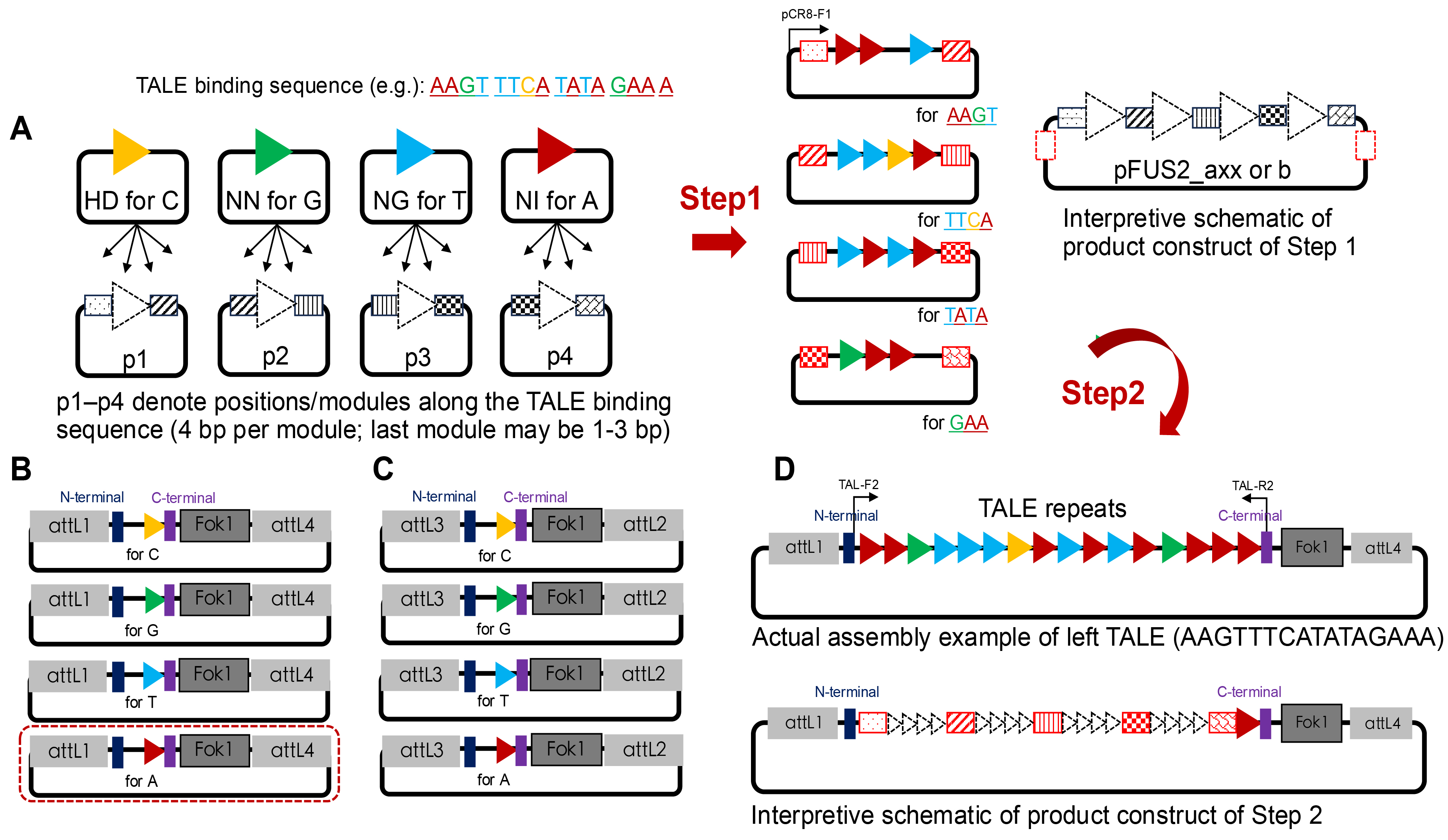
Figure 1. Two-step assembly workflow for constructing a left TALE repeat array using the Platinum Gate TALEN kit. (A) Overview of TALE repeat design and Step 1 assembly. Each TALE repeat recognizes a single nucleotide via its repeat-variable di-residue (RVD): HD (C), NN (G), NG (T), and NI (A), indicated by triangle colors. The example TALE binding sequence is partitioned into modules along the target (e.g., AAGT–TTCA–TATA–GAA–A). p1–p4 denote module positions along the TALE binding sequence (typically 4 bp per module; the last module may be 1–3 bp). In Step 1, the appropriate one-module plasmids are selected at each position and assembled into partial arrays corresponding to each target module (e.g., “for AAGT,” “for TTCA,” “for TATA,” and “for GAA”). An interpretive schematic of the Step 1 product captured in the pFUS2_aXX/b vector is shown to illustrate the order of module assembly and junctions. (B) Entry vectors used for Step 2 assembly of left TALE repeats (attL1–attL4 configuration), with the last base indicated (“for C/G/T/A”). (C) Entry vectors used for Step 2 assembly of right TALE repeats (attL3–attL2 configuration), with the last base indicated (“for C/G/T/A”). All vectors used in Figure 1B,C can be obtained from Addgene (ID158728-158735). (D) Step 2: Combine the Step 1 module arrays to generate the full-length left/right TALE repeat array in the destination/entry vector. The upper schematic shows an actual assembly example corresponding to the example binding sequence (triangle colors indicate RVD/recognized base). The lower schematic is provided only as an interpretive aid to highlight module boundaries and junction order (patterned boxes) and represents the same construct in an alternative notation. Primer positions used for assembly verification are indicated (pCR8-F1 for Step 1 constructs; TAL-F2 and TAL-R2 for Step 2 constructs). Symbol/outline legend: Solid black rounded rectangles represent plasmid/vector backbones. Patterned boxes (black in panel A; red in panels A and D) denote assembly junctions/module boundaries used during Step 1–Step 2 construction (i.e., boundaries between repeat blocks/modules and/or cloning junction sites). The use of black vs. red is for visual separation of layers (module-selection schematics in panel A vs. assembled products in Step 1/Step 2) and does not indicate different junction sequences. Red dashed outlines highlight representative vectors selected as examples in panels B and C.
Table 1. Primers used in this protocol for colony PCR screening and Sanger sequencing of Step 1–3 assembly constructs
| Construct | Primer | Sequence (5’→3’) | Sanger sequencing | ||
| TALEN | TALECD G1333 | TALECD G1397 | |||
| Step-1 product | pCR8-F1 | TTGATGCCTGGCAGTTCCCT | √ | √ | √ |
| pCR8-R1 | CGAACCGAACAGGCTTATGT | ||||
| Step-2 product | TAL-F1 | TTGGCGTCGGCAAACAGTGG | |||
| TAL-F2 | GGAGGCAGTGCATGCATGGC | √ | √ | √ | |
| TAL-R2 | GGCGACGAGGTGGTCGTTGG | √ | √ | √ | |
| Step-3 product | pK7WG2_fsFw | TTCTCTTAGGTTTACCCGCC | √ | √ | √ |
| tHSP_fsRv | CCATAGTCCATACCATAGCAC | √ | √ | √ | |
| pK7WG2_pOLE1_fsRv | CTAAGTAGGGTGCCGGGGAT | √ | √ | ||
| HAcheck1_Rv | CGTAATCTGGAACATCGTATGGGTA | √ | |||
| Stagcheck4_Rv | CTCTCGAACTTGGCAGCGGC | √ | |||
| 1333N_checkRv | GGCAGGCAATTGAGGAGCTG | √ | |||
| 1333C_checkRv | GGCGTAATTCGGATACGGAG | √ | |||
| 1397N_checkRv | CAGGCAATTGTGGAGCTGAG | √ | |||
| 1397C_checkRv | CGTTTCTCCTGTAGCTCCTC | √ | |||
Check marks indicate primers used for Sanger sequencing of the corresponding construct/plasmid. “TALEN,” “TALECD_G1333,” and “TALECD_G1397” denote the indicated expression constructs used in this protocol.
The assembled vectors of left and right TALE repeats (called the first entry vector and third entry vector) were prepared for the next multiple LR reaction. The specific experimental steps are based on the original manuals with slight modifications, and are described as follows:
B1. Step 1
1. Split the TALE-binding sequence, excluding the last nucleotide, into 4-module blocks and, if applicable, a terminal 1–3-module block. The last nucleotide is specified by the C-terminal half repeat module and is therefore not included in the standard TALE repeat assembly. For example, for the 16-bp target sequence AAGTTTCATATAGAAA, the first 15 bp are assembled as TALE repeats and are divided into four blocks: AAGT, TTCA, TATA, and GAA, while the final A is determined by the C-terminal half repeat.
Note: In the first-round assembly, each block is assembled as a 4-module unit. If the terminal block contains 1–3 nucleotides, it should be assembled using the corresponding 1–3-module scheme listed in Table 2. The last nucleotide of the TALE-binding sequence is specified by the C-terminal half repeat module and is therefore excluded from the standard TALE repeat assembly.
Table 2. Reagent volumes for first-round TALE module assembly using 1–4 module schemes
| Reagent | 1 module (μL) | 2 modules (μL) | 3 modules (μL) | 4 modules (μL) |
|---|---|---|---|---|
| 25 ng/μL pFUS2 vector | 0.3 | 0.3 | 0.3 | 0.3 |
| 50 ng/μL module vector | 0.3 × 1 | 0.3 × 2 | 0.3 × 3 | 0.3 × 4 |
| 10× T4 DNA ligase buffer | 0.2 | 0.2 | 0.2 | 0.2 |
| Bsal-HFv2 | 0.1 | 0.1 | 0.1 | 0.1 |
| Quick ligase | 0.1 | 0.1 | 0.1 | 0.1 |
| Sterile distilled water (SDW) | 0.9 | 0.6 | 0.3 | 0 |
| Total | 2.0 | 2.0 | 2.0 | 2.0 |
2. Prepare first-round assembly reactions in 200 μL PCR tubes by adding the required reagents and volumes according to Table 2 (use the 4-module scheme for each 4-bp block; use the 1–3-module scheme if the last block contains 1–3 bp).
3. Run the thermal cycling program under the following conditions:
a. 37 °C for 5 min
b. 16 °C for 10 min
c. Repeat steps (a)–(b) for 6 cycles
d. Hold at 4 °C
4. Add 0.25 μL of 10× NEB CutSmart buffer and 0.1 μL of BsaI-HF to each reaction tube and run the thermal cycling program under the following conditions:
a. 37 °C for 60 min
b. 80 °C for 5 min
c. Hold at 4 °C
5. Transfer 2 μL of the reaction solution into a 1.5 mL microcentrifuge tube containing 25 μL of chemically competent E. coli DH5α cells kept on ice.
Note: Gently tap the tube to mix and briefly spin down the contents.
6. Incubate the mixture on ice for 30 min.
7. Perform heat shock at 42 °C for 45 s.
8. Immediately place the tube on ice for 3 min.
9. Add 250 μL of SOC medium to the tube and gently mix by tapping.
10. Incubate the cells at 37 °C for 30 min (up to 1 h) with gentle shaking.
11. Plate the transformed cells onto LB agar plates containing spectinomycin (Spm, 100 μg/mL).
12. Add 50 μL of 2% X-gal and 50 μL of 0.1 M IPTG onto the surface of each plate, then spread approximately 120 μL of the transformation mixture evenly.
13. Incubate the plates overnight at 37 °C.
14. From each agar plate, pick four individual colonies and perform colony PCR using primers pCR8-F1 and pCR8-R1.
Note: If no correctly assembled clones are identified among the initial four colonies, or if PCR results are unclear, additional colonies can be screened.
15. Analyze the PCR products by agarose gel electrophoresis and identify colonies showing the expected amplicon size (Table 3).
Table 3. Expected colony PCR amplicon sizes used to verify intermediate constructs during TALEN/ TALECD assembly
| Primer pair | Colony PCR amplicon | Note |
|---|---|---|
| pCR8-F1/pCR8-R1 | 102 × n + 226 bp | for checking step-1 product |
| TAL-F1/TAL-R2 | 102 × N + 212 bp | for checking step-2 product |
| pK7WG2_fsFw/tHSP_fsRv | 5–6 kbp | for checking step-3 product |
For Step 1 module-assembly constructs, colony PCR using pCR8-F1/pCR8-R1 yields an expected product size of 102 × n + 226 bp, where n denotes the number of assembled modules (n = 1–4). For Step 2 TALE repeat-array constructs, colony PCR using TAL-F1/TAL-R2 yields an expected product size of 102 × N + 212 bp, where N denotes the number of TALE repeats (N = 6–21). For Step 3 final expression/destination constructs, colony PCR using pK7WG2_fsFw/tHSP_fsRv typically produces a ~5–6 kb amplicon.
16. Inoculate colonies with successful amplification into 2 mL of LB liquid medium supplemented with Spm (100 μg/mL).
17. Incubate the cultures overnight at 37 °C with shaking at 200 rpm.
18. Extract plasmid DNA from overnight cultures using the FastGene Plasmid Mini kit according to the manufacturer’s instructions.
19. Verify the assembled plasmids by Sanger sequencing using primer pCR8-F1 or pCR8-R1. Plasmids whose sequencing results were consistent with the predicted vector sequence were used for the second-round assembly.
Note: Verified pFUS vectors can be stored at 4 °C for short-term use (e.g., when the next step is performed on the following day). For longer interruptions, purified plasmid DNA should be stored at -20 °C. These storage conditions allow the workflow to be paused without affecting subsequent assembly steps.
B2. Step 2
1. Perform the second-round assembly to generate full-length TALE repeat arrays by combining the pre-assembled pFUS_a vectors obtained from Step 1 with the appropriate last-module vectors.
2. Use the pFUS_a vectors (50 ng/μL), which contain the verified TALE repeat blocks assembled in the first-round assembly, as the main repeat array backbone.
3. Select the appropriate left or right last-module vector (50 ng/μL) according to:
a. Whether the construct is designed for the left or right TALEN arm, and
b. The terminal nucleotide of the TALE-binding sequence, as listed in Table 4 (Figure 1B, C).
Note: The last nucleotide of the TALE-binding sequence is specified by the last-module vector and is therefore not included in the pFUS_a repeat array.
Table 4. Selection of last-module vectors for left and right TALEN constructs based on the terminal nucleotide
| Last module | TALEN left vector | TALEN right vector |
|---|---|---|
| HD (C) | pF-5A L1-L4 | pR-5A L2-L3 |
| NG (T) | pF-6A L1-L4 | pR-6A L2-L3 |
| NI (A) | pF-7A L1-L4 | pR-7A L2-L3 |
| NN (G) | pF-8A L1-L4 | pR-8A L2-L3 |
4. Assemble the reaction mixtures according to the reagent compositions and volumes specified in Table 5.
Table 5. Reagent composition and volumes for second-round assembly of full-length TALE repeat arrays
| Reagent | a1a (μL) | a2a-a2b (μL) | a3a-a3c (μL) | a4a-a4d (μL) |
|---|---|---|---|---|
| 50 ng/μL pFUS_a vector | 0.6 × 1 | 0.6 × 2 | 0.6 × 3 | 0.6 × 4 |
| 50 ng/μL pFUS_b vector | 0.6 | 0.6 | 0.6 | 0.6 |
| 50 ng/μL left or right vector | 0.3 | 0.3 | 0.3 | 0.3 |
| 10× T4 DNA ligase buffer | 0.4 | 0.4 | 0.4 | 0.4 |
| Esp3I | 0.2 | 0.2 | 0.2 | 0.2 |
| Quick ligase | 0.2 | 0.2 | 0.2 | 0.2 |
| SDW | 1.7 | 1.1 | 0.5 | 0 |
| Total | 4.0 | 2.0 | 2.0 | 2.0 |
5. Run the thermal cycling program under the following conditions:
a. 37 °C for 5 min
b. 16 °C for 10 min
c. Repeat steps (a)–(b) for 10 cycles
d. Hold at 4 °C
6. Add 0.5 μL of 10× Tango Buffer, 0.5 μL of 10 mM DTT, and 0.2 μL of Esp3I to each reaction tube, and run the thermal cycling program under the following conditions:
a. 37 °C for 60 min
b. 80 °C for 5 min
c. Hold at 4 °C
7. Transfer 2 μL of the second-round assembly reaction into a 1.5 mL microcentrifuge tube containing 25 μL of chemically competent E. coli DH5α cells kept on ice.
Note: Gently mix the suspension by tapping and briefly spin down the contents.
8. Incubate the mixture on ice for 30 min (5–30 min).
9. Perform heat shock at 42 °C for 45 s. Immediately place the tube on ice for 3 min.
10. Add 250 μL of SOC medium and gently mix by tapping.
11. Incubate the cells at 37 °C for 30 min (up to 1 h) with shaking.
12. Plate the entire transformation mixture (approximately 250 μL) onto LB agar plates supplemented with kanamycin (Km, 50 μg/mL). Add 50 μL of 2% X-gal and 50 μL of 0.1 M IPTG onto the surface of each plate, then spread evenly. Incubate the plates overnight at 37 °C.
13. On the following day, select white colonies from each kanamycin-resistant plate, indicating successful insertion of the TALE repeat array.
Note: Blue colonies typically represent empty or incorrectly assembled vectors and should be excluded from further analysis.
14. Pick four white colonies per plate and perform colony PCR using primers TAL-F1 and TAL-R2 to verify correct second-round assembly of the TALE repeats.
Notes:
1. If no correctly assembled clones are identified among the initial four colonies, or if PCR results are unclear, additional colonies can be screened.
2. We use TAL-F1/TAL-R2 for colony PCR because these primers anneal to invariant vector regions and provide robust amplification from crude colony templates. For sequence confirmation, positive clones are subjected to Sanger sequencing using TAL-F2/TAL-R2, as TAL-F2 initiates reads closer to the TALE repeat array and is therefore suitable for sequencing validation of the repeat composition and junctions.
15. Analyze PCR products by agarose gel electrophoresis and identify colonies showing the expected amplicon size corresponding to full-length TALE repeat arrays.
16. Inoculate colonies with correct PCR amplification into 2 mL of LB liquid medium supplemented with Km (50 μg/mL). Incubate the cultures overnight at 37 °C with shaking at 200 rpm.
17. Extract plasmid DNA using the FastGene Plasmid Mini kit according to the manufacturer’s instructions. Measure plasmid DNA concentration using a NanoDrop spectrophotometer.
18. Verify the assembled TALEN vectors by Sanger sequencing using both primers TAL-F1 and TAL-R1. Plasmids whose sequencing results matched the predicted vector sequence were selected for subsequent Gateway cloning.
C. Construction of TALEN-expression binary vectors by multiple LR reaction
In the case of Invitrogen MultiSite Gateway cloning (Thermo Fisher Scientific) for the mitoTALENs vector, an additional internal entry vector (called second entry vector) was cloned into the destination vector between the right and left regions of the TALEN ORFs, which were cloned into the first and third entry vectors. An Arabidopsis heat shock protein (HSP) terminator, a RPS5A (ribosomal protein S5A) promoter, and the pre-sequence that directs the TALEN tools into mitochondria/plastid/nucleus were cloned into the second entry vector with specific recombination sites attR4 and attR3 (Figure 2C). Depending on where the target gene is located, three types of pre-sequences were cloned into both the second entry vector and destination vector to introduce the TALEN tools into mitochondria, chloroplast, or nucleus: mitochondrial localization signal (MLS) of Arabidopsis ATPase delta subunit [2], plastid-targeting signal peptide (PTP) of Arabidopsis thaliana RecA1 protein (51 aa) [3,4], and an SV40 nuclear localization signal (NLS) [5]. The basic backbones of destination vectors are from pK7WG2 [6], and our destination vector was made by replacing the CaMV 35S (Cauliflower Mosaic Virus) promoter with the Arabidopsis RPS5A promoter and inserting the MLS/PTP/NLS coding sequence and Ole1 pro::Ole1-GFP derived from pFAST02 [7] into the destination vectors of pK7WG2 with specific recombination sites attR1 and attR2 (Figure 2D). All vectors can be obtained from Addgene: destination vector with pre-sequence MLS (163145), PTP (171723), and NLS (193370), and second entry vector with pre-sequence MLS (163146), PTP (171736), and NLS (193371). It should be noted that the destination vector with the pre-sequence MLS (163145) we deposited at Addgene has not been assembled with the oleosin-GFP expression cassette.
The reading frames in the assembled first and third entry vectors and second entry vectors were transferred into the destination vector using GatewayTM LR ClonaseTM II Enzyme Mix (Figure 2). The specific experimental steps are based on the original manuals with slight modifications, and are described as follows:
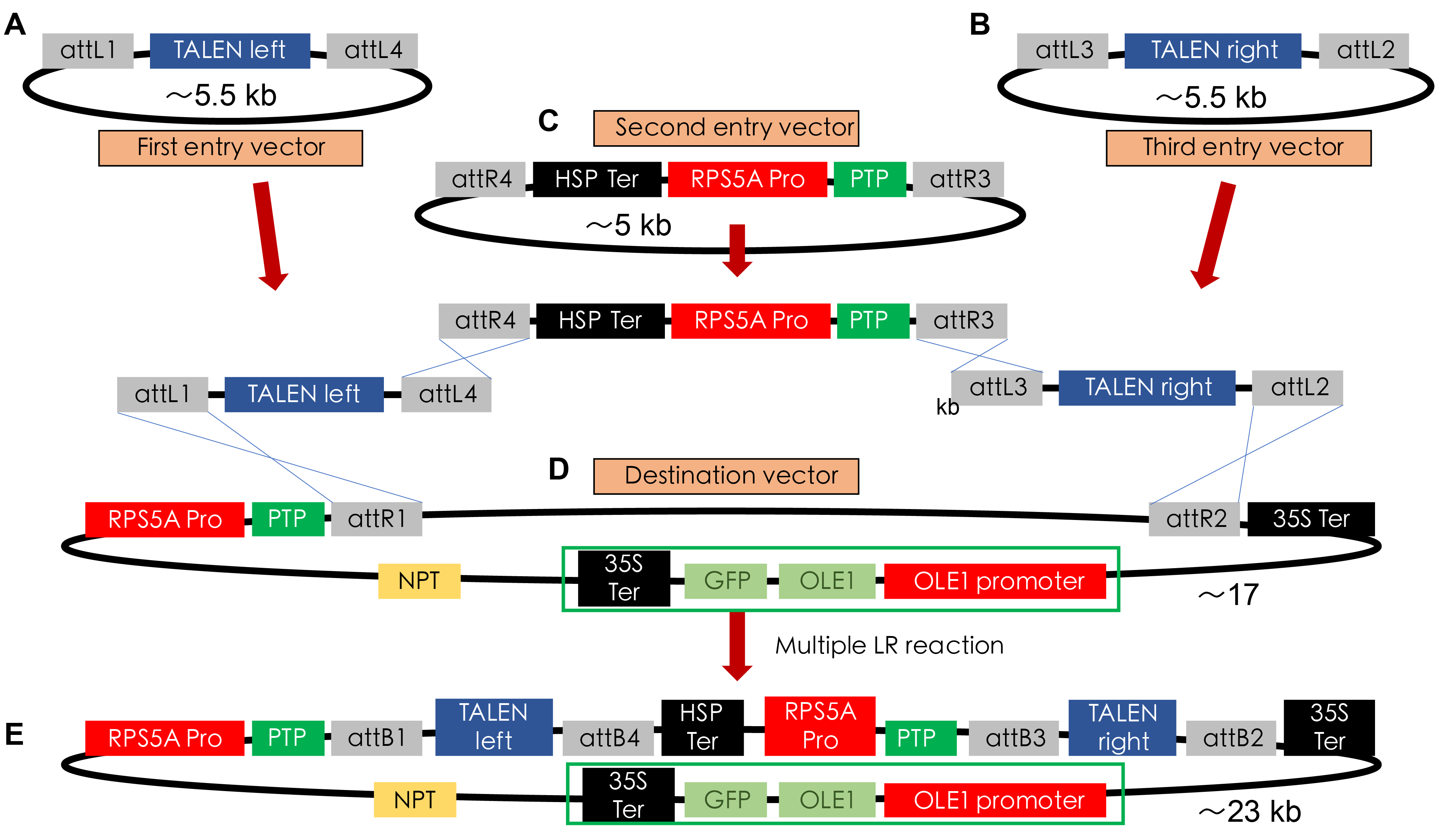
Figure 2. Multiple LR reaction of ptpTALENs. (A) First entry vector. (B) Second entry vector. (C) Third entry vector. (D) Destination vector. (E) The final ptpTALEN vector. RPS5A Pro: RPS5A promoter. PTP: pre-sequence of plastid-targeting signal peptide. HSP Ter: Heat shock protein terminator. 35S Ter: CaMV 35S terminator. NPT: neomycin phosphotransferase gene. Oleosin-GFP expression cassette is marked in a green box.
1. Dilute the four plasmid vectors to the following final concentrations: First entry vector, 50 ng/μL; second entry vector, 50 ng/μL; third entry vector, 50 ng/μL; destination vector, 150 ng/μL.
Convert femtomoles (fmol) to nanograms (ng) using the following formula:
ng = (x fmol) (N) (660 fg/fmol) (1 ng/106 fg)
where x is the number of femtomoles and N is the plasmid size in base pairs.
2. Calculate the volume of each plasmid required to achieve a molar ratio of 1:1:1:2 (first entry: second entry: third entry: destination vector) in a final reaction volume of 8 μL. Mix the four plasmids according to the calculated volumes and adjust the total volume to 8 μL using TE buffer.
3. Add 1 μL of Gateway LR Clonase II Plus enzyme mix to the 8 μL plasmid mixture. Incubate the reaction at 25 °C for 16 h.
4. Terminate the LR reaction by adding 1 μL of Proteinase K, vortex briefly, and incubate at 37 °C for 10 min.
5. Transform the LR reaction products into chemically competent E. coli HST08P cells, which were chosen for their high transformation efficiency for large Ti plasmids (15–20 kb).
6. Add 2 μL of the LR reaction mixture to a 1.5 mL microcentrifuge tube containing 25 μL of E. coli HST08P competent cells kept on ice.
7. Gently tap the tube to mix and incubate on ice for 30 min.
8. Perform heat shock at 42 °C for 45 s.
9. Add 250 μL of SOC medium, gently mix by tapping, and incubate at 37 °C for 1 h.
10. Spread the entire transformation mixture onto LB agar plates containing 50 μg/mL spectinomycin (Spm) and incubate overnight at 37 °C.
11. Select five to eight colonies and perform colony PCR using primers pK7WG2_fsFw and tHSP_fsRv.
12. Identify colonies showing an amplicon of approximately 5.5 kb and inoculate positive colonies into 2 mL of LB liquid medium supplemented with 50 μg/mL spectinomycin.
13. Incubate cultures overnight at 37 °C with shaking at 200 rpm, then extract plasmid DNA using the FastGene Plasmid Mini kit according to the manufacturer’s instructions. Measure plasmid DNA concentration using a NanoDrop spectrophotometer.
14. Verify correct assembly of the final TALEN expression vectors by restriction enzyme digestion using at least two different restriction enzymes, selected with the aid of Geneious Prime software. Expected restriction fragment patterns were determined by in silico digestion of the fully assembled reference vectors using Geneious software. These predicted fragment sizes were used as a guide for interpreting experimental digestion results.
15. Further confirm vector integrity by Sanger sequencing using the primers pK7WG2_pOLE1_fsRv, TALR1r, pRPS5A_fsFw2, and TALR2 (Table 1).
Note: The destination vector containing the mitochondrial localization signal (MLS; Addgene #163145) deposited in this study does not include the Oleosin–GFP expression cassette.
D. Transformation and detection of T1 generation
1. Transform Arabidopsis thaliana Col-0 plants by floral dipping using Agrobacterium tumefaciens strain C58C1 carrying one of the TALEN expression vectors described above, following the standard floral dip protocol.
2. Select T1 transgenic seeds based on GFP fluorescence. Sow GFP-positive seeds on 1/2 MS medium supplemented with 125 mg/L Claforan, stratify at 4 °C for 7 days, and then grow the seedlings under longday conditions (22 °C, 16 h light/8 h dark).
3. Typically, 15–20 T1 seedlings are selected for initial genotyping.
Note: When nTALENs are used for nuclear genome editing, DNA methylation may affect editing efficiency.
4. Extract crude genomic DNA from T1 plants at different developmental stages. Collect an emerging leaf or cotyledon at 7 or 11 days after sowing (DAS) and the uppermost rosette leaf at 24, 28, or 33 DAS. Place one leaf into 50 μL of plant very rapid PCR isolation buffer (5 mmol/L EDTA, pH 8.0; 0.1 mol/L Tris-HCl, pH 9.5) and incubate at 98 °C for 15 min. Perform PCR-based genotyping using KOD One PCR Master Mix according to the manufacturer’s instructions under the following thermal cycling conditions:
a. 94 °C for 30 s
b. 32 cycles of:
i. 98 °C for 10 s
ii. 57 °C for 5 s
iii. 68 °C for 5 s
c. Hold at 4 °C
Note: The annealing temperature (57 °C in ii) should be adjusted according to primer Tm. The extension time (5 s in iii) should be adjusted according to amplicon length and the exact polymerase extension rate. For KOD One polymerase, the extension rate is approximately 1 kb per 5 s.
E. Brief introduction of construction of TALECDs
TALE-based cytidine deaminase (TALECD) is another base editing tool that can induce targeted C-to-T base editing. Mitochondria-targeted and plastid-targeted TALECDs, mitoTALECDs, and ptpTALECDs have been reported to efficiently edit organellar genomes [8–10]. TALECDs are expressed by binary vectors with a similar structure to TALENs. The assembling methods of TALE repeats for TALECDs and TALENs are identical, but with different vectors in Step 2 during assembly. The Fok1 ORF region in each four vectors containing the module for the last base of the DNA binding sequence of left TALEN and right TALEN was replaced with the half cytidine deaminase (CD) ORF DddAtox and a uracil glycosylase inhibitor (UGI) ORF, so that two expressed TALE–half CD–UGI molecules can bind to the specific DNA sequence and induce the targeted C-to-T conversion. All vectors used in Step 2 assembly can be obtained from Addgene (ID 171724-171735, 191579-191598).
Data analysis
A. Identification of edited T1 plants
After collecting T1 seeds, transformed seedlings were selected by GFP fluorescence or antibiotic resistance, depending on the marker used in the construct. Positive T1 plants were then grown, and genomic DNA was extracted from a single leaf using plant very rapid PCR isolation buffer. The genomic region spanning the target site was amplified by PCR using primers designed to flank the edited locus.
For mitoTALENs, the expected editing outcome is cleavage of the target sequence, leading to disruption or knockout of the target gene. After a double-strand break (DSB) is introduced into the target locus, the two broken ends are typically not rejoined by classical non-homologous end joining. Instead, in plant mitochondria, the broken ends are frequently repaired through homologous recombination with other mitochondrial genomic regions sharing sequence homology with the cleavage-flanking sequences. As a result, the mitochondrial genome structure is altered, and the original primer pair flanking the target site can no longer amplify the expected fragment, yielding a deletion genotype.
Because plant cells contain multiple copies of the mitochondrial genome, the extent of editing can vary among genome copies within an individual plant. When mitoTALEN induces DSBs in nearly all copies of the target sequence, the target amplicon is no longer detected by PCR, corresponding to a homoplasmic deletion (Figure 3A, upper panel). In contrast, when only a subset of mitochondrial genome copies is eliminated, the target locus shows a reduced copy number, corresponding to a heteroplasmic deletion. In this case, the PCR band of the target locus is weaker than that of the internal control gene cox2 from the same plant and is usually also weaker than the corresponding target amplicon in wild-type Col-0 plants (Figure 3A, lower panel). This classification can be further validated by quantitative PCR, as described by Arimura et al. [11].
For mitoTALECDs, the editing outcome is a base substitution rather than a DSB. Therefore, PCR amplification alone is insufficient to confirm editing, and the PCR products must be subjected to Sanger sequencing. Figure 3B shows representative editing outcomes in T1 plants after mitoTALECD-mediated editing of the mitochondrial atp6-2 locus in Arabidopsis thaliana. In line 1, homoplasmic C-to-T substitutions were detected at both the G5 and C10 positions. In line 5, a homoplasmic C-to-T substitution was detected at G5, whereas both C and T signals were observed at C10, indicating a heteroplasmic C-to-T substitution at that position (Figure 3B).
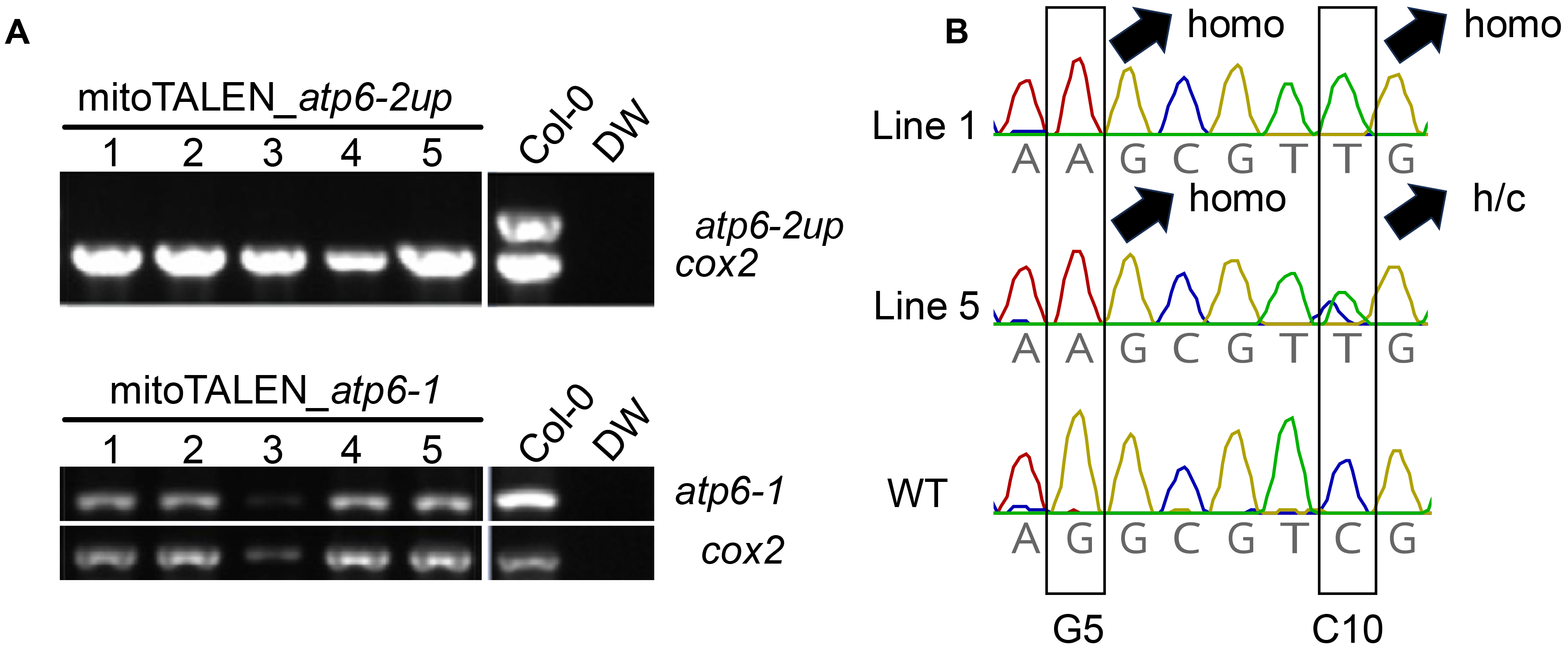
Figure 3. Representative editing outcomes induced by mitoTALEN and mitoTALECD in the mitochondrial genome of Arabidopsis thaliana. (A) Representative editing outcomes generated by mitoTALENs in Arabidopsis mitochondria. This panel is adapted in part from Figure 1 of Arimura et al. [11]. (B) Representative editing outcomes generated by mitoTALECD in Arabidopsis mitochondria. This panel shows unpublished data obtained from mitoTALECD-mediated editing of the mitochondrial atp6-2 locus in Arabidopsis thaliana. G5 refers to the fifth guanine (G) counted from the left TALE repeats, and C10 refers to the tenth cytosine (C) counted from the same left TALE repeats.
B. Editing efficiencies of TALE-based tools in the nuclear, mitochondrial, and plastid genomes of Arabidopsis thaliana
To provide an overview of the editing outcomes achieved with TALE-based tools in Arabidopsis thaliana, we summarized previously published results from our group for mitochondrial, plastid, and nuclear genome editing using mitoTALEN, mitoTALECD, ptpTALECD, and nTALECD (Figure 4).
In this study, editing efficiency was defined as the percentage of edited T1 transformants among the total number of analyzed T1 transformants. For TALECD-mediated editing, both homoplasmic/homozygous and heteroplasmic/heterozygous (or chimeric) edited plants were counted as edited individuals, and the total editing efficiency was calculated as the sum of these edited classes divided by the total number of analyzed T1 plants. For mitoTALEN-mediated editing, edited plants were classified according to the observed molecular outcome, including decrease or deletion of the target locus, and the total editing efficiency was calculated in the same manner.
As shown in Figure 4, editing efficiencies vary depending on the target locus, genome compartment, and editing tool used. In mitochondrial genome editing with mitoTALEN, highly efficient target elimination was observed at several loci, with total editing efficiencies reaching 100% for atp6-1, atp6-2, and atp6-2up, whereas editing at atp6-1up was lower. In mitochondrial base editing with mitoTALECD, editing efficiencies differed substantially among target genes and DddAtox split combinations, ranging from low or undetectable editing to 100% total editing in some cases. Similarly, plastid genome editing with ptpTALECD showed locus- and construct-dependent variation, with some target sites showing no detectable edits and others reaching high total editing efficiencies. Nuclear genome editing with nTALECD also produced edited T1 plants at both tested cyo1 target sites, although the total efficiencies were lower than the highest values observed for organellar editing.
These results illustrate that the editing performance of TALE-based tools in Arabidopsis is strongly influenced by the target site and editor configuration. Therefore, when evaluating a new construct, we recommend calculating editing efficiency as the proportion of edited T1 plants among all analyzed transformants and distinguishing edited plants into heteroplasmic/heterozygous and homoplasmic/homozygous classes whenever applicable.
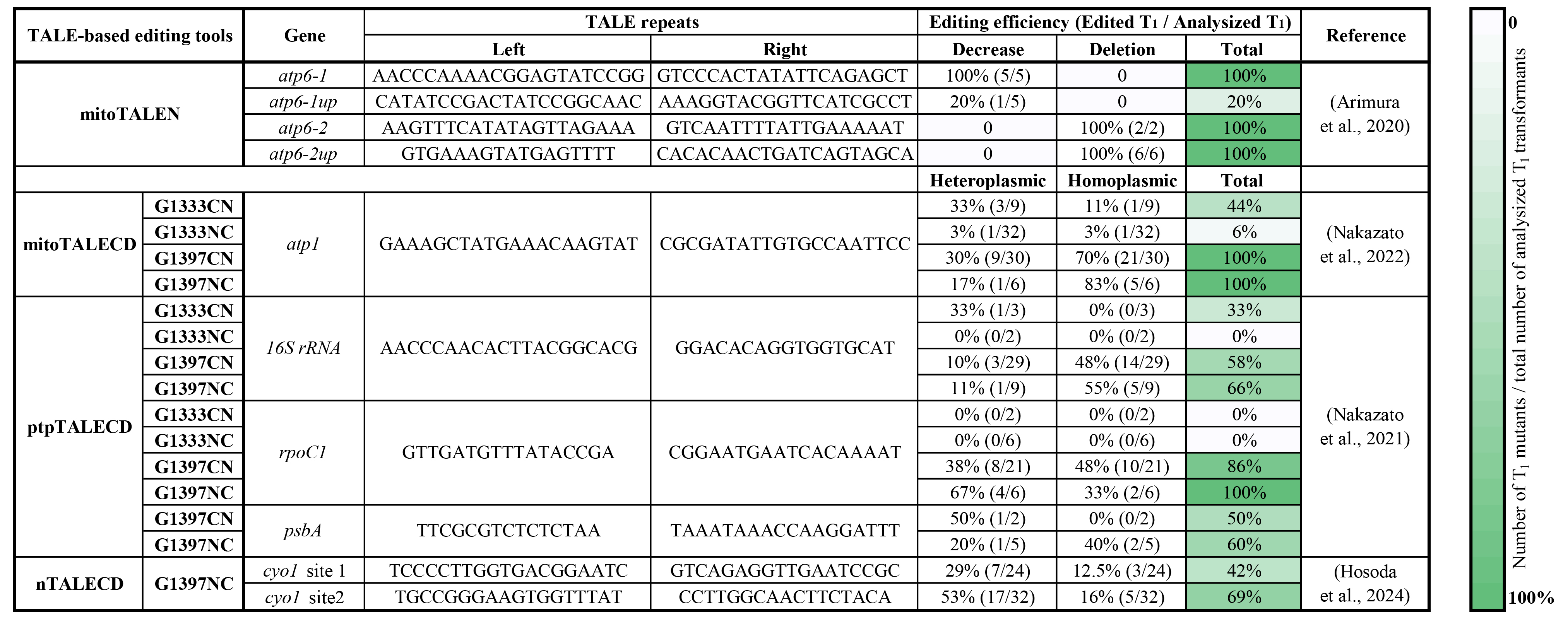
Figure 4. Summary of reported editing efficiencies of TALE-based tools in the nuclear, mitochondrial, and plastid genomes of Arabidopsis thaliana
Previously published editing results from our group are summarized for mitoTALEN, mitoTALECD, ptpTALECD, and nTALECD applications in Arabidopsis thaliana. Editing efficiency was defined as the proportion of edited T1 transformants among the total number of analyzed T1 transformants. For mitoTALEN, edited plants were categorized as Decrease or Deletion. For TALECD-based editors, edited plants were categorized as Heteroplasmic or Homoplasmic, where applicable. Values are presented as percentages, with the number of edited T1 transformants and analyzed T1 transformants indicated in parentheses.
Validation of protocol
To demonstrate that this protocol is reliable and transferable across laboratories and targets, we assembled an external validation set consisting of peer-reviewed applications that used the same TALEN/TALE-based vector logic, repeat assembly, and plant transformation workflow. These independent reports are consolidated in Figure 4 and therefore serve as out-of-study evidence that the stepwise procedures reproduce as written. In Arabidopsis plastids and mitochondria, TALE-based editors reproducibly yielded either precise C-to-T substitutions (TALECD) or locus-specific deletions (mitoTALENs), with detection in T1 and, for many loci, stable inheritance toward homoplasmy—exactly the outcomes anticipated by the organellar workflow described here. In the nucleus, nTALECD consistently produced window-restricted C-to-T conversions when following the same assembly and expression principles, matching the expected positional profile. The vectors used by these validated studies are openly available, and their broad distribution has enabled replication of MultiSite Gateway assembly, TALE-repeat construction, and Agrobacterium-mediated transformation across groups, supporting generalizability. The published applications summarized in Figure 4 employed standard orthogonal readouts—PCR amplicon loss for deletions and Sanger sequencing for base conversions, consistent with the checkpoints prescribed in this protocol. Independent reviews converge on the same methodological conclusion: due to persistent gRNA import barriers, CRISPR systems remain challenging for routine plant organellar editing, whereas protein-only TALE/TALEN frameworks provide a practical route at present.
Collectively, the external reports compiled in Figure 4 validate that the procedural steps presented here are robust and reproducible across organellar and nuclear targets and across laboratories. For biological and technical interpretation of the efficiency distributions observed in Figure 4, see Data analysis (Section B).
General notes and troubleshooting
General notes
1. Quality control of large plasmids: TALEN expression vectors generated in this protocol are typically large (15–20 kb). To minimize recombination or deletion events during propagation in E. coli, it is recommended to use recombination-deficient competent strains and to avoid prolonged bacterial culture times. Plasmid integrity should always be verified by restriction enzyme digestion using at least two independent enzymes before plant transformation.
2. Choice of competent cells for transformation: For routine cloning steps involving small-to-medium-sized plasmids, E. coli DH5α cells are sufficient. However, for MultiSite Gateway LR reactions generating large binary vectors, highly competent strains such as HST08P are strongly recommended to ensure adequate transformation efficiency.
3. Variability in genome-editing efficiency: Editing efficiency achieved by TALENs can vary depending on the target sequence, genomic context, and epigenetic status of the locus. In particular, DNA methylation has been reported to reduce TALEN activity in nuclear genomes, whereas mitochondrial and plastid genomes generally show higher and more consistent editing efficiencies.
4. Verification of TALE repeat assemblies: Due to the repetitive nature of TALE repeat arrays, Sanger sequencing of both ends of the assembled repeats is essential. Partial sequencing or restriction analysis alone may fail to detect internal assembly errors, which can compromise editing efficiency.
5. Handling of sterile media and stock solutions: Heat-labile components such as glucose, MgCl2, MgSO4, and vitamin solutions should be added after autoclaving using sterile-filtered stock solutions. Repeated freeze–thaw cycles of vitamin stocks and enzyme solutions should be avoided to maintain reagent stability.
6. Applicability to other plant species and targets: Although this protocol is optimized for Arabidopsis thaliana, the overall workflow can be adapted to other plant species with minor modifications, such as changes in promoters, selectable markers, or transformation methods. Target site selection rules for TALE binding remain broadly applicable across plant genomes.
Troubleshooting
Problem 1: Low efficiency or failure of TALE repeat assembly.
Possible causes: Incorrect module combination or degradation of enzyme components.
Solutions: Confirm the module order carefully before assembly and use freshly thawed enzymes. Avoid repeated freeze–thaw cycles.
Problem 2: Few or no colonies after LR reaction.
Possible cause: Low transformation efficiency of large Ti plasmids.
Solutions: Use highly competent E. coli strains such as HST08P and extend recovery time in SOC medium to 1 h.
Problem 3: Unexpected rearrangements in final TALEN binary vectors.
Possible cause: Recombination events during propagation in E. coli.
Solutions: Minimize culture time and avoid overgrowth. Verify plasmids using multiple restriction enzymes before plant transformation.
Acknowledgments
Conceptualization, C.Z. and S.A.; Investigation, C.Z.; Writing—Original Draft, C.Z.; Writing—Review & Editing, S.A.; Funding acquisition, S.A.; Supervision, S.A.
This protocol was based on and validated in previously published studies on mitochondrial genome editing in Arabidopsis thaliana using TALE-based tools.
The authors acknowledge previous work that established TALE-based organellar genome editing platforms, which formed the basis for the development and optimization of the present protocol: The Plant Journal (2020), DOI: 10.1111/tpj.15041; Nature Plants (2021), DOI: 10.1038/s41477-021-00954-6; Proceedings of the National Academy of Sciences (2022), DOI: 10.1073/pnas.2121177119; and Plant Biotechnology (2024), DOI: 10.5511/plantbiotechnology.24.0510a.
This work was supported by grants from the Japan Society for the Promotion of Science (JSPS) KAKENHI Grant No. 24H02271 to Z.C. and S.A.
Competing interests
The authors declare no conflicts of interest.
References
- Sakuma, T., Hosoi, S., Woltjen, K., Suzuki, K., Kashiwagi, K., Wada, H., Ochiai, H., Miyamoto, T., Kawai, N., Sasakura, Y., et al. (2013). Efficient TALEN construction and evaluation methods for human cell and animal applications. Genes to Cells. 18(4): 315–326. https://doi.org/10.1111/gtc.12037
- Arimura, S. i. and Tsutsumi, N. (2002). A dynamin-like protein (ADL2b), rather than FtsZ, is involved in Arabidopsis mitochondrial division. Proc Natl Acad Sci USA. 99(8): 5727–5731. https://doi.org/10.1073/pnas.082663299
- Cerutti, H., Osman, M., Grandoni, P. and Jagendorf, A. T. (1992). A homolog of Escherichia coli RecA protein in plastids of higher plants. Proc Natl Acad Sci USA. 89(17): 8068–8072. https://doi.org/10.1073/pnas.89.17.8068
- Cao, J., Combs, C. and Jagendorf, A. T. (1997). The Chloroplast-Located Homolog of Bacterial DNA Recombinase. Plant Cell Physiol. 38(12): 1319–1325. https://doi.org/10.1093/oxfordjournals.pcp.a029124
- Kalderon, D., Roberts, B. L., Richardson, W. D. and Smith, A. E. (1984). A short amino acid sequence able to specify nuclear location. Cell. 39(3): 499–509. https://doi.org/10.1016/0092-8674(84)90457-4
- Karimi, M., Inzé, D. and Depicker, A. (2002). GATEWAY™ vectors for Agrobacterium-mediated plant transformation. Trends Plant Sci. 7(5): 193–195. https://doi.org/10.1016/s1360-1385(02)02251-3
- Shimada, T. L., Shimada, T. and Hara‐Nishimura, I. (2010). A rapid and non‐destructive screenable marker, FAST, for identifying transformed seeds of Arabidopsis thaliana. Plant J. 61(3): 519–528. https://doi.org/10.1111/j.1365-313x.2009.04060.x
- Mok, B. Y., de Moraes, M. H., Zeng, J., Bosch, D. E., Kotrys, A. V., Raguram, A., Hsu, F., Radey, M. C., Peterson, S. B., Mootha, V. K., et al. (2020). A bacterial cytidine deaminase toxin enables CRISPR-free mitochondrial base editing. Nature. 583(7817): 631–637. https://doi.org/10.1038/s41586-020-2477-4
- Nakazato, I., Okuno, M., Yamamoto, H., Tamura, Y., Itoh, T., Shikanai, T., Takanashi, H., Tsutsumi, N. and Arimura, S. i. (2021). Targeted base editing in the plastid genome of Arabidopsis thaliana. Nat Plants. 7(7): 906–913. https://doi.org/10.1038/s41477-021-00954-6
- Nakazato, I., Okuno, M., Zhou, C., Itoh, T., Tsutsumi, N., Takenaka, M. and Arimura, S. i. (2022). Targeted base editing in the mitochondrial genome of Arabidopsis thaliana. Proc Natl Acad Sci USA. 119(20): e2121177119. https://doi.org/10.1073/pnas.2121177119
- Arimura, S., Ayabe, H., Sugaya, H., Okuno, M., Tamura, Y., Tsuruta, Y., Watari, Y., Yanase, S., Yamauchi, T., Itoh, T., et al. (2020). Targeted gene disruption of ATP synthases 6‐1 and 6‐2 in the mitochondrial genome of Arabidopsis thaliana by mitoTALENs. Plant J. 104(6): 1459–1471. https://doi.org/10.1111/tpj.15041
Article Information
Publication history
Received: Jan 14, 2026
Accepted: Mar 19, 2026
Available online: Apr 1, 2026
Published: May 5, 2026
Copyright
© 2026 The Author(s); This is an open access article under the CC BY-NC license (https://creativecommons.org/licenses/by-nc/4.0/).
How to cite
Zhou, C. and Arimura, S. (2026). TALENs and Related Technologies for Editing Nuclear and Organellar Genomes in a Model Plant, Arabidopsis thaliana. Bio-protocol 16(9): e5668. DOI: 10.21769/BioProtoc.5668.

 Download Citation in RIS Format
Category
Plant Science > Plant transformation > Agrobacterium
Cell Biology > Cell engineering > TALEN
Molecular Biology > DNA > DNA cloning
Do you have any questions about this protocol?
Post your question to gather feedback from the community. We will also invite the authors of this article to respond.
 Post a Question


