


- Protocols

- Articles and Issues
- For Authors
- About
- Become a Reviewer


Controlled Transmission of a Fijivirus Under Field Conditions Using Mass-Reared Planthoppers

Published: Vol 16, Iss 6, Mar 20, 2026 DOI: 10.21769/BioProtoc.5642 Views: 468
Reviewed by: Nelson Bernardi LimaAnonymous reviewer(s)
 PDF
PDF  Ask a question
Advertisement



Protocol Collections
Comprehensive collections of detailed, peer-reviewed protocols focusing on specific topics



Related protocols


Abstract
Mal de Río Cuarto disease, caused by a Fijivirus, is a major constraint for maize production in Argentina. The traditional evaluation of resistant hybrids is limited by the low efficiency of natural virus transmission and the lack of standardized field inoculation methods. We developed a protocol that combines laboratory mass-rearing of the planthopper vector Delphacodes kuscheli with a controlled field transmission system. The method involves the synchronized production of large insect populations, acquisition of viruliferous vectors under controlled conditions, and their safe transport to the field using specialized containers. Transmission is achieved through individual cages placed on maize seedlings, ensuring high inoculation pressure under field-like conditions. This protocol enables reliable and reproducible virus transmission, facilitating large-scale screening of maize hybrids and other cereals. Its main advantages are the high throughput of vector production, improved transmission efficiency, and adaptability to diverse experimental designs.
Key features
• Requires prior knowledge of the target planthopper vector's life cycle for successful rearing and colony maintenance.
• Generates a high-throughput output of over 400 insects per rearing cage, ensuring sufficient vector availability for large-scale transmission assays.
• Field transmission assays conducted under field-like conditions (soil, temperature, and humidity) combined with directed, high-pressure inoculation.
• Optimized for efficient Fijivirus transmission, including management of the viral latency period and maximization of transmission efficiency.
Keywords: Maize Mal de Río Cuarto
Planthoppers
Field transmission
Delphacodes kuscheli
Fijivirus
Insect mass-rearing
Host resistance
Mal de Río Cuarto
Planthoppers
Field transmission
Delphacodes kuscheli
Fijivirus
Insect mass-rearing
Host resistance
Background
Mal de Río Cuarto is endemic to Argentina and is the most significant viral disease affecting maize crops [1–2]. As a result of infection, producers suffer substantial economic losses, such as those observed during the 2020/21 season, with incidences reaching 83% in the endemic area (province of Córdoba, Argentina) [3]. In this context, seed companies are making substantial efforts to develop maize hybrids that show improved resistance to the virus, aiming to reduce or prevent production losses.
The main challenge in identifying tolerant or resistant hybrids lies in the fact that the causal agent, mal de Río Cuarto virus (MRCV, Spinareoviridae: Fijivirus), is transmitted exclusively by insect vectors of the family Delphacidae in a persistent and propagative manner [4,5]. This requires a latency period between virus acquisition and the ability to transmit [6]. Another critical issue is the low probability of transmission under natural conditions [7] because the main vector, Delphacodes kuscheli Fennah, does not prefer maize as a host [8] and cannot complete its life cycle on this crop [9]. High insect mortality during the latency period, combined with low transmission efficiency under experimental and natural conditions, necessitates large insect populations to perform transmission assays for both maintaining plant inoculum and evaluating maize hybrids [10].
Previous studies on MRCV have described methodologies for rearing D. kuscheli and multiplying viral inoculum using wheat plants [5,10]. However, no standardized methods for conducting MRCV transmission assays under field conditions have been documented. Although studies on other maize viruses exist [11], their approaches are not applicable to the MRCV–maize–D. kuscheli pathosystem. This work focuses on developing a methodology for mass rearing D. kuscheli to obtain large insect populations in limited space and on establishing a suitable protocol for field experiments, such as evaluating maize materials for MRCV resistance. Notably, this methodology is also suitable for winter cereal trials.
Compared with previously described methods, our protocol offers significant advantages. The rearing and transmission cages are cost-effective and easy to manufacture, reducing operational complexity. The mass-rearing system allows a greater number of adults to be placed for oviposition than in earlier methodologies, producing 400–500 nymphs per cage and reducing maintenance time because host plants deteriorate less and nymphs are transferred at more advanced, less fragile stages, minimizing mortality associated with mouth aspirator handling [10]. During transport to the field, insect mortality is minimal, and transfer to maize plants is rapid and efficient using individual cages secured with stakes, preventing losses due to storms. Unlike other protocols that are not applicable to D. kuscheli due to its lack of maize preference [11], our method ensures vector confinement, increasing inoculation pressure and achieving transmission efficiencies (expressed as disease incidence) of up to 57.3% in susceptible genotypes, demonstrating the robustness of the protocol (see Validation of the protocol section and Table 1), which is comparable to those obtained in wheat under controlled conditions [12–14]. As a limitation, the protocol requires specific infrastructure and trained personnel for vector life cycle management. Beyond maize, this methodology can be adapted for winter cereal trials, broadening its experimental applicability.
Materials and reagents
Biological materials
1. Insect vectors (Delphacodes kuscheli Fennah) obtained from a colony reared in the Vector's Laboratory of IPAVE, originally isolated from the MRCV-endemic area (Río Cuarto County, Córdoba Province, Argentina) and maintained since 2008
2. MRCV isolate (Spinareoviridae: Fijivirus) obtained from infected oat plants of the Río Cuarto endemic area and maintained in wheat (Triticum aestivum cv. ProINTA Federal) since 2008 by serial vector transmissions using D. kuscheli
3. Seeds of wheat (Triticum aestivum) and oat (Avena sativa) obtained by the Wheat Group of IPAVE and the Wheat Improvement, Biotechnology and Pathology Group of the INTA EEA Marcos Juárez (Córdoba, Argentina)
4. Maize seedlings and field trials provided by Syngenta Agro S.A
Trials and breeding room supplies
1. Transparent plastic bottles, 6 L (repurposed water containers) for the fabrication of mass rearing cages
Note: Each bottle features openings at both ends and has windows on the sides. Voile fabric covers all openings (except the bottom end) to ensure air circulation and prevent humidity condensation and insect escape. A small hole in the voile at the top end allows insects entry and remains sealed with a cotton plug (Figure 1a).
2. Sifted soil
3. Clear plastic trays (24.5 × 17.5 × 4.5 cm; L × W × H)
4. Fine-mesh white polyester fabric (voile), ~50 mesh (300 μm aperture)
5. Soft rubber hose (approximately 7.5 mm Ø)
6. 1,000 μL universal fit pipette tips (e.g., Corning, catalog number: CLS4868 or similar)
7. Fast-drying universal adhesive for fabric bonding (Uhu® or similar product)
8. Scissors
9. Professional cutter with segmented blade, 25 mm
10. Cotton (as needed)
11. 500 mL reinforced PET bottles (approximately 0.5 mm wall thickness) for transmission cages
Note: These cages feature a cut-out bottom end (Figure 2a) and a voile-covered lateral window to facilitate ventilation and prevent humidity condensation (Figure 2b). The screw cap end serves as an entry point for insects (Figure 2d).
12. Test tubes, 13 × 100 mm (e.g., Pyrex, catalog number: PY-99445-12)
13. Cool box 54 L (69 × 35 × 45 cm; L × W × H) (e.g., Colombraro, catalog number: 4252)
14. Plasticized test tube rack for 24 test tubes, 4 rows × 6 tubes (e.g., Leone, catalog number: LE-7-104)
15. 40 cm long stakes, fabricated from steel wire (2.5 mm Ø)
16. Elastic rubber bands (approximately 50 mm Ø)
17. Cold packs
18. Commercial contact aerosol insecticide (pyrethroid-based, e.g., Raid® Home and Garden) (store at room temperature and verify the expiration date before use to ensure maximum efficacy)
19. LED bulbs (9–13 W, e.g., Philips LED bulbs) in cool-daylight (6,500 K) and warm-white (3,000 K) spectra
20. T8 LED tubes (9 W, 60 cm, e.g., Philips LED tubes) in cool-daylight (6,500 K) and neutral-white (4,000 K) spectra
Equipment
1. Growth room at 23 ± 2 °C with 16/8 h light/dark photoperiod (cool and warm LED lamps and neutral white LED tubes can be used); alternatively, a plant growth chamber (e.g., Conviron or similar) may be used
2. Dehumidifier (Hitachi, model RD-1604LD)
3. Mouth aspirator
Note: This device comprises a soft rubber tube (50–60 cm long × 7.5 mm Ø) fitted with a 1,000 μL pipette tip at each end. A piece of voile fabric between one end of the tube and the pipette tip acts as a mesh barrier, preventing insects from entering the tube (Figures 1a and 3a).
4. Insect manipulation chamber (black acrylic or black-painted wood; approximately 50 × 30 × 30 cm or larger; H × W × D).
Note: The chamber consists of a black box with an open front for manipulation access and a translucent glass panel at the back to allow light transmission (Figure 3b).
5. Bedside lamp with LED light (Figure 3b)
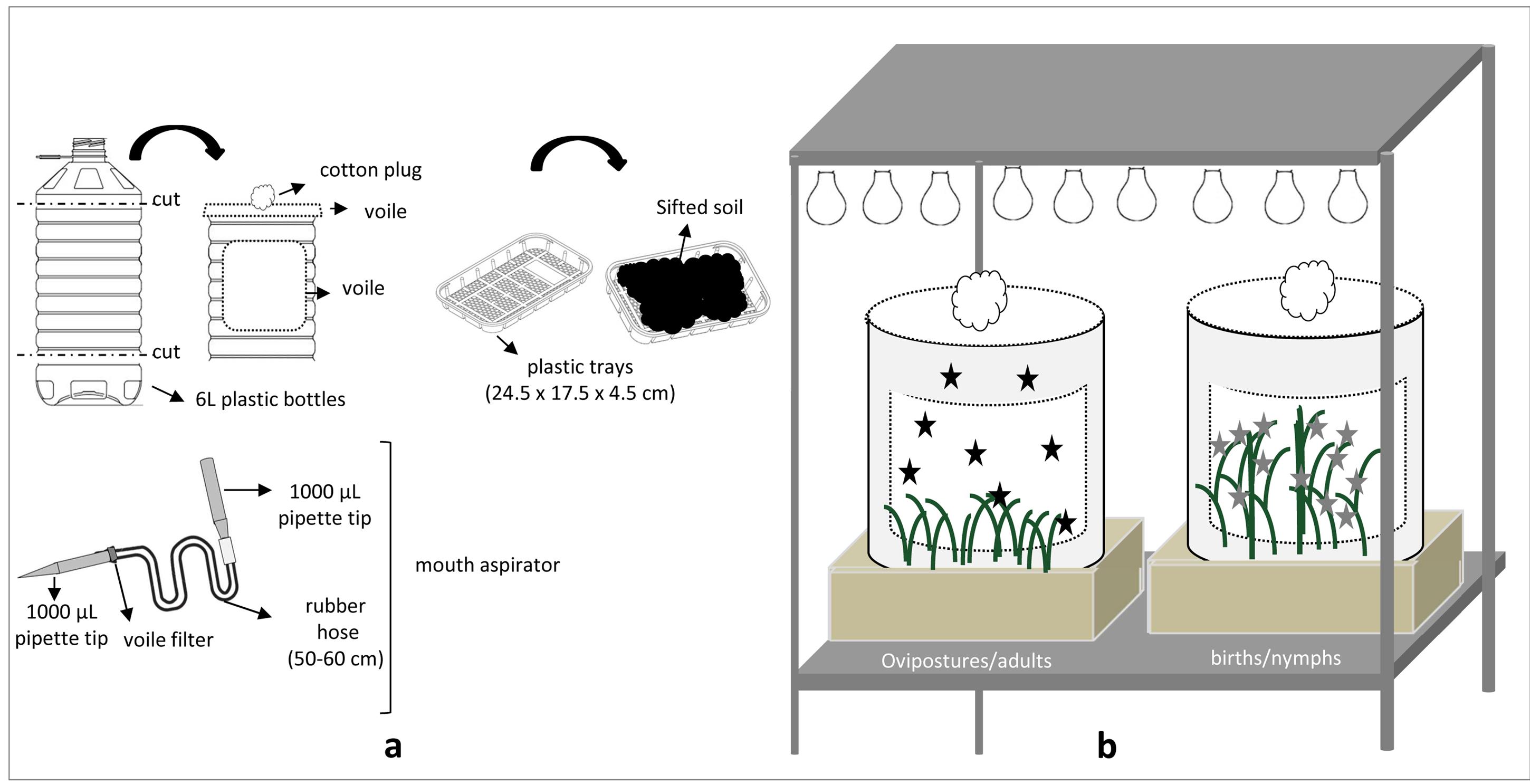
Figure 1. Representative scheme of mass rearing of Delphacodes kuscheli. (a) Supplies for the fabrication of mass rearing cages and mouth aspirator: 6 L plastic containers, fine-mesh voile for ventilation windows, pipette tips, and soft rubber tubing. (b) Rearing cages with oviposition and nymph emergence of D. kuscheli conditioned under LED lighting (16/8 h light/dark photoperiod) to ensure optimal plant and insect growth. (Black stars: adult insects; grey stars: nymphs).
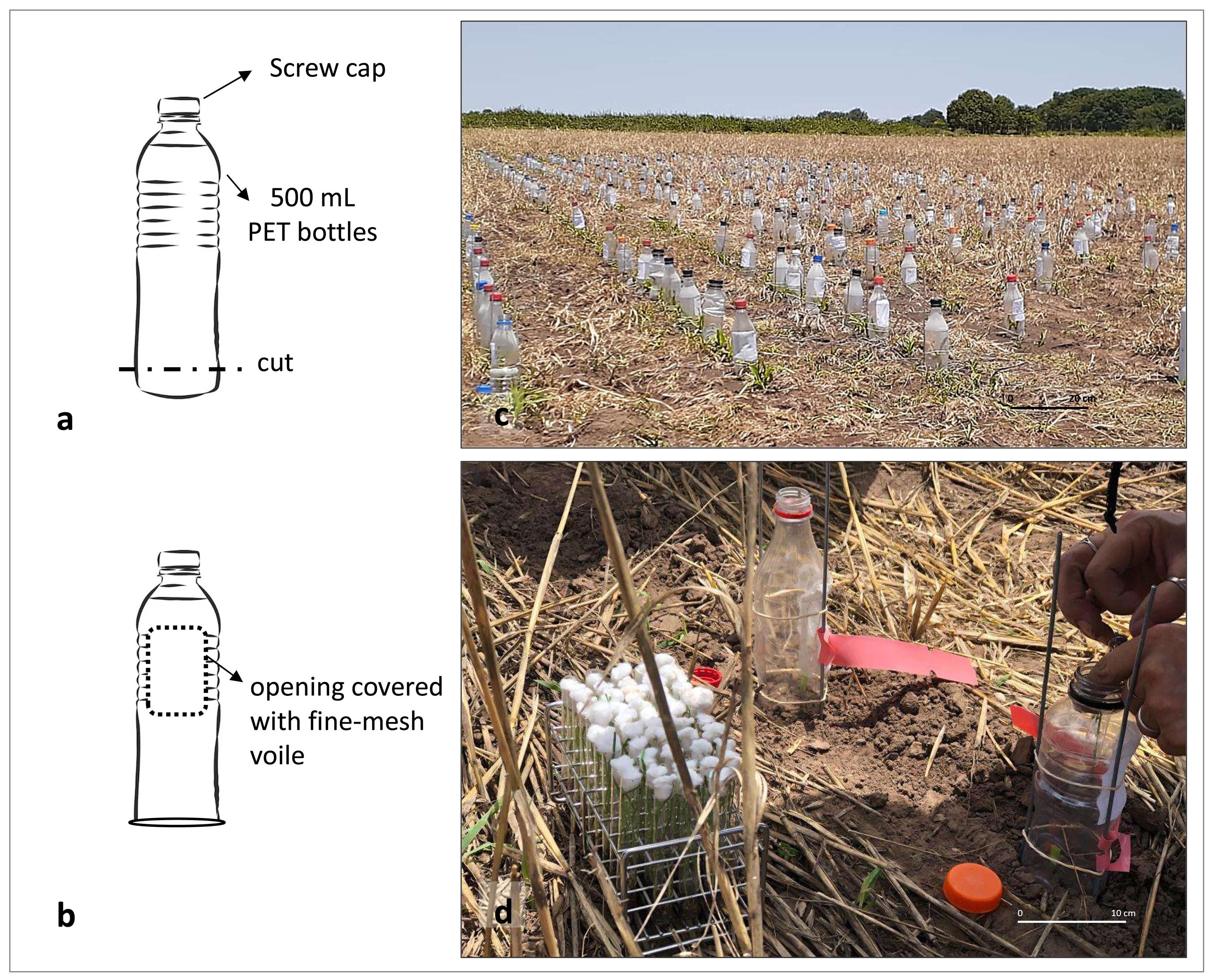
Figure 2. Field transmission of mal de Río Cuarto virus. (a, b) Schematic diagrams showing the fabrication of the transmission cages using 500 mL PET bottles. The design includes an opening covered with fine-mesh voile for ventilation. (c) Cages placed in the field over individual maize plants for controlled viral transmission. (d) Transfer of viruliferous insects from the glass tubes into the transmission cages. Note the use of two securing stakes (40 cm long × 2.5 mm Ø) and two elastic bands to ensure stability.
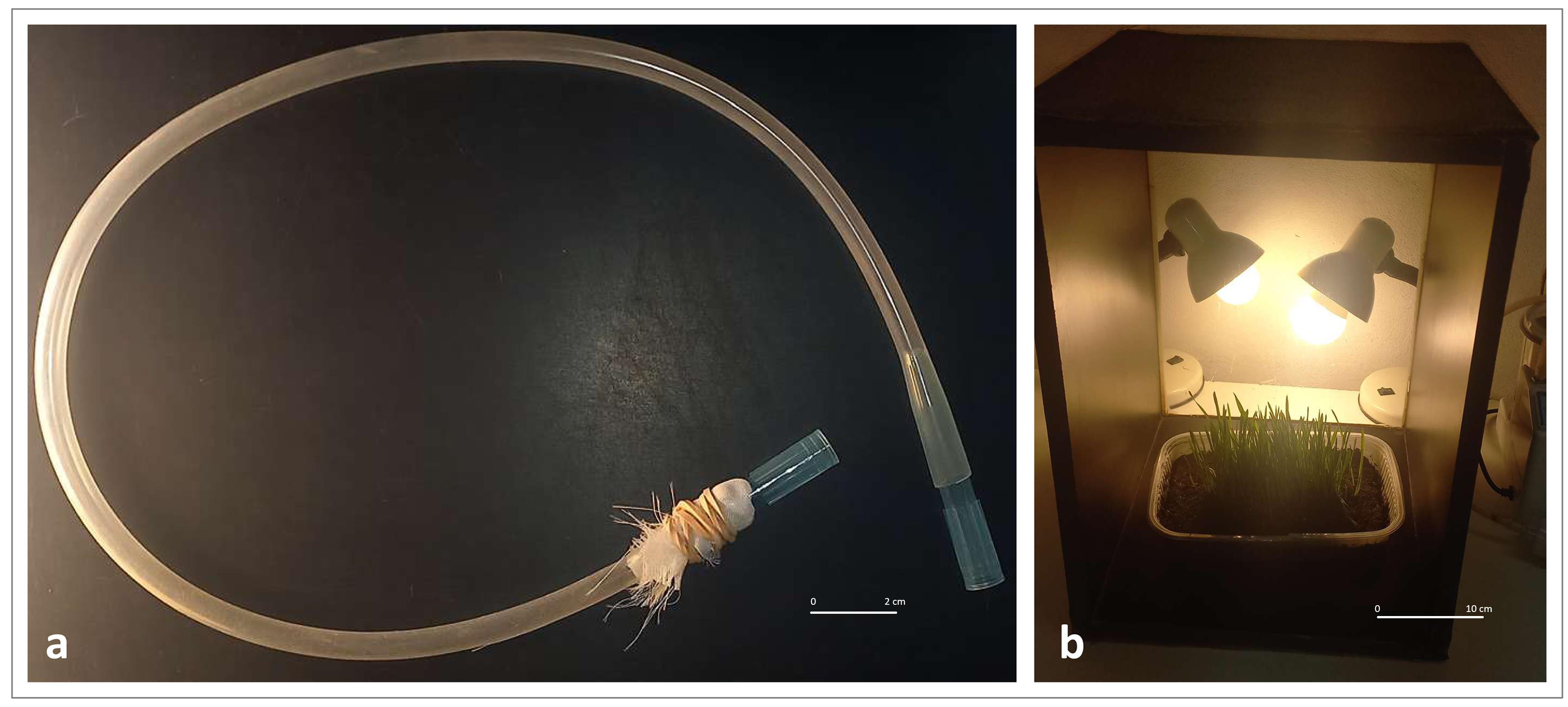
Figure 3. Materials for insect handling and light-assisted manipulation. (a) Mouth aspirator for D. kuscheli collection, showing the soft rubber tubing (40 cm long × 2.5 mm Ø), pipette tips, and a fine-mesh voile filter secured with an elastic band to prevent insect inhalation. (b) Insect manipulation chamber (black-painted wood) equipped with two LED lamps at the back. The light source facilitates the collection of insects by taking advantage of their positive phototaxis, directing them toward the back of the chamber for easier capture.
Software and datasets
1. Infostat (15) or similar platforms (e.g., Navure, https://www.navure.com/)
Procedure
A. Mass rearing cages for planthoppers
1. Before sowing, immerse wheat seeds in water for 4–5 h to activate them.
2. Fill plastic trays with approximately 2 cm of sifted soil (Figure 1a). Place wheat seeds in the center of each tray and cover with soil. After watering, place the trays on shelves under a 16/8 h light/dark photoperiod with relative humidity (RH) of 50% in a temperature-controlled room (23 ± 2 °C) (Figures 1b and 4). Once the seedlings emerge, enclose them in the designed cage and remove any seedlings outside the cage.
3. For the initiation of mass rearing, transfer mature D. kuscheli adults (20 females and 15 males) from the healthy population maintained in your insect room using a mouth aspirator (Figures 1a and 3a). Place insects inside cages containing wheat seedlings to facilitate oviposition. Relocate the adults to new seedlings every 48 h. Once the adults are removed, keep the plants with oviposition marks until eggs hatch. Label the cages to indicate the date of nymph emergence (“births”) (Figure 1b).
Note: Avoid using an excessive number of adults to prevent severe phytotoxicity, ensuring the host plants remain in good condition until eggs hatch.
4. To ensure the optimal development and continuous nutritional supply of the nymphs, periodically transfer them to fresh host plants.
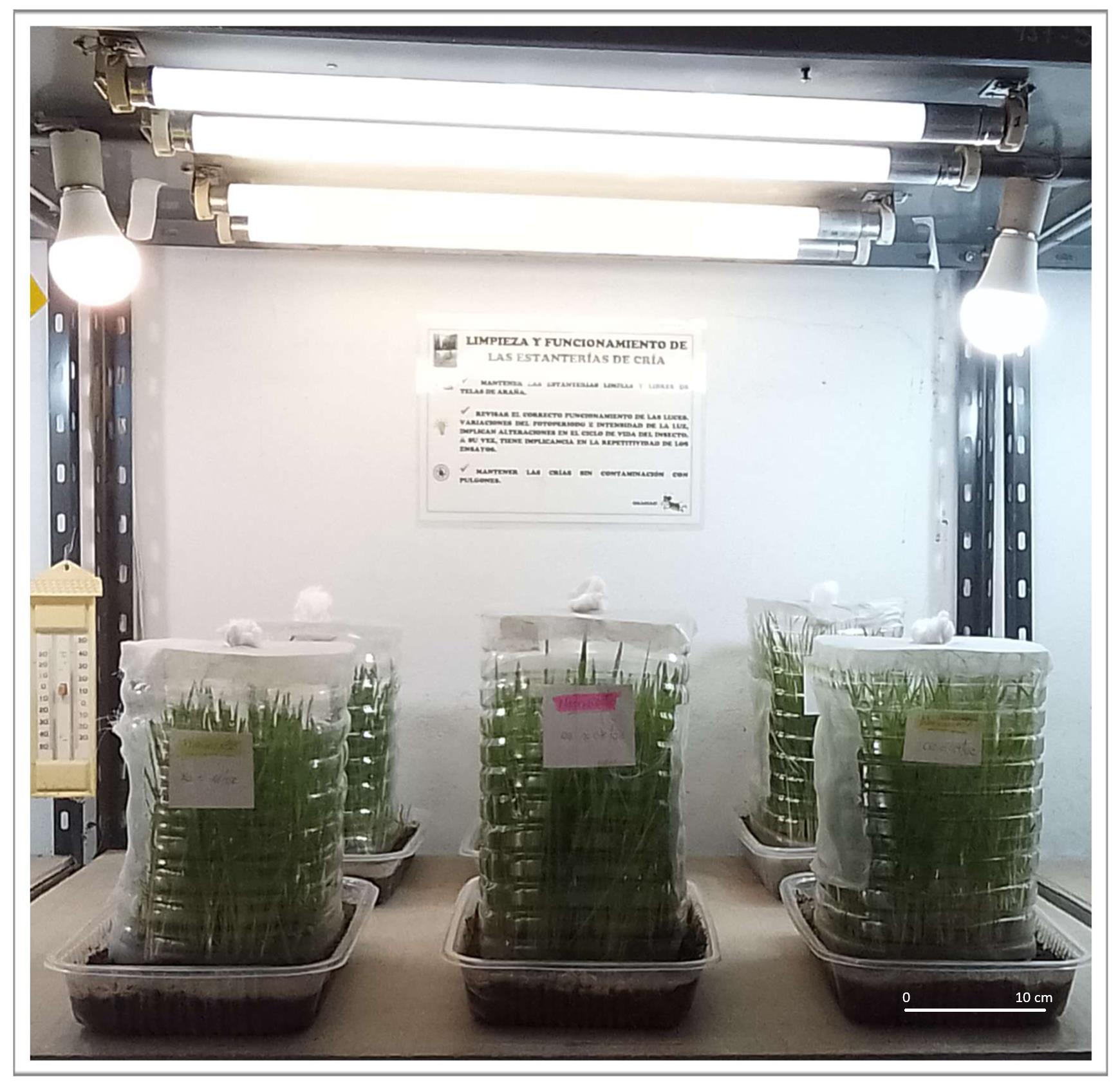
Figure 4. Mass rearing of Delphacodes kuscheli. Colonies are maintained under controlled conditions (16/8 h light/dark photoperiod, 50% relative humidity, and 23 ± 2 °C). The mass rearing cages consist of plastic trays filled with soil and a mixture of wheat (T. aestivum) and oat seedlings (A. sativa), enclosed by 6 L transparent plastic containers (repurposed water bottles) with fine-mesh windows to ensure proper ventilation.
B. Insect infection
1. Carry out acquisition of viruliferous insects for MRCV following established methodologies [5,10,16]. Briefly, allow second-instar nymphs to feed on MRCV-infected wheat (cv. ProInta Federal) for a 48 h acquisition access period (AAP). Subsequently, transfer insects to cages containing healthy wheat plants for a latency period of 17 days. Conduct all assays under the same environmental conditions described for planthopper rearing.
Note: Initiate the acquisition process with a population two- to three-fold larger than the final number of insects required. This overpopulation compensates for both the low transmission efficiency inherent to the MRCV–D. kuscheli system and the natural mortality occurring during the 17-day latency period, ensuring a sufficient number of viruliferous survivors for field inoculation.
2. Simultaneously, maintain a control group of second-instar nymphs, reared on healthy plants and subjected to identical handling procedures as the viruliferous insects.
C. Transport of insects to the field
1. Condition insects for transport to the field inside glass tubes (Figures 2d and 5a). Seal each tube with a dry cotton plug; it should contain two healthy wheat seedlings (at the 1–2 developed-leaf stage). Slightly moisten the roots of the seedlings and wrap them with a minimal amount of soil to maintain viability. Place a total of 9 insects, necessary for the inoculation of each maize plant, in each tube.
Note: Prepare extra tubes to replace any insects that die during transport or handling.
2. Secure the tubes on racks (Figure 5a) inside a plastic cooler to protect them from any impacts and the high ambient temperatures typical of the maize planting date (Figure 5b).
Note: Use a minimal number of cold packs for temperature conditioning. Avoid excessive cooling, as it may induce insect dormancy or cause condensation on the inner walls of the tube. Moisture-induced adhesion of the wings to the tube surface can immobilize the insects and cause mortality.
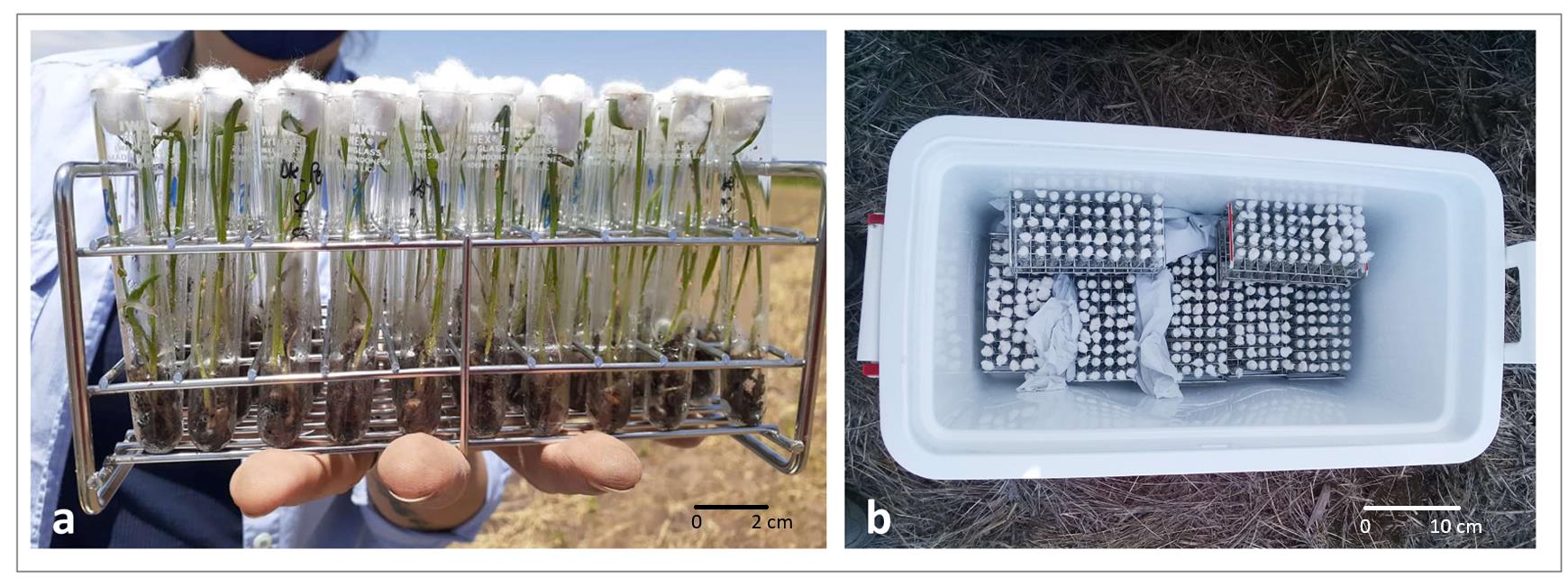
Figure 5. Transport of insects to the field. (a) Glass test tubes (13 × 100 mm) containing viruliferous planthoppers on wheat seedlings. (b) Test tube racks placed inside a cool box (35 × 69 × 45 cm) with cold packs to maintain temperature stability during transport.
D. Virus transmission to maize in the field
1. Place each transmission cage over the plant, semi-burying it in the soil. Secure the cage to two 40 cm wire stakes using elastic rubber bands to prevent it from tipping over (Figure 2c).
Note: Perform the field evaluation on maize seedlings at the coleoptile or V1 stage. This is crucial to maximize MRCV transmission with D. kuscheli, given the inverse relationship between host plant developmental stage and susceptibility (17,18).
2. To introduce the insects into the cage, first remove the bottle's screw cap. Then, invert the glass tube and align it with the opening of the cage to facilitate insect passage. Apply gentle manual tapping to the tube to ensure complete insect transfer.
3. After 72 h post-inoculation (HPI), carefully remove the cage cap. Apply the contact insecticide via two pulverizations directed into the interior of the cage. Immediately reseal the cap and allow an exposure time of 10–15 min to ensure complete mortality of surviving insects (Figure 6). Subsequently, remove the cages from the field.
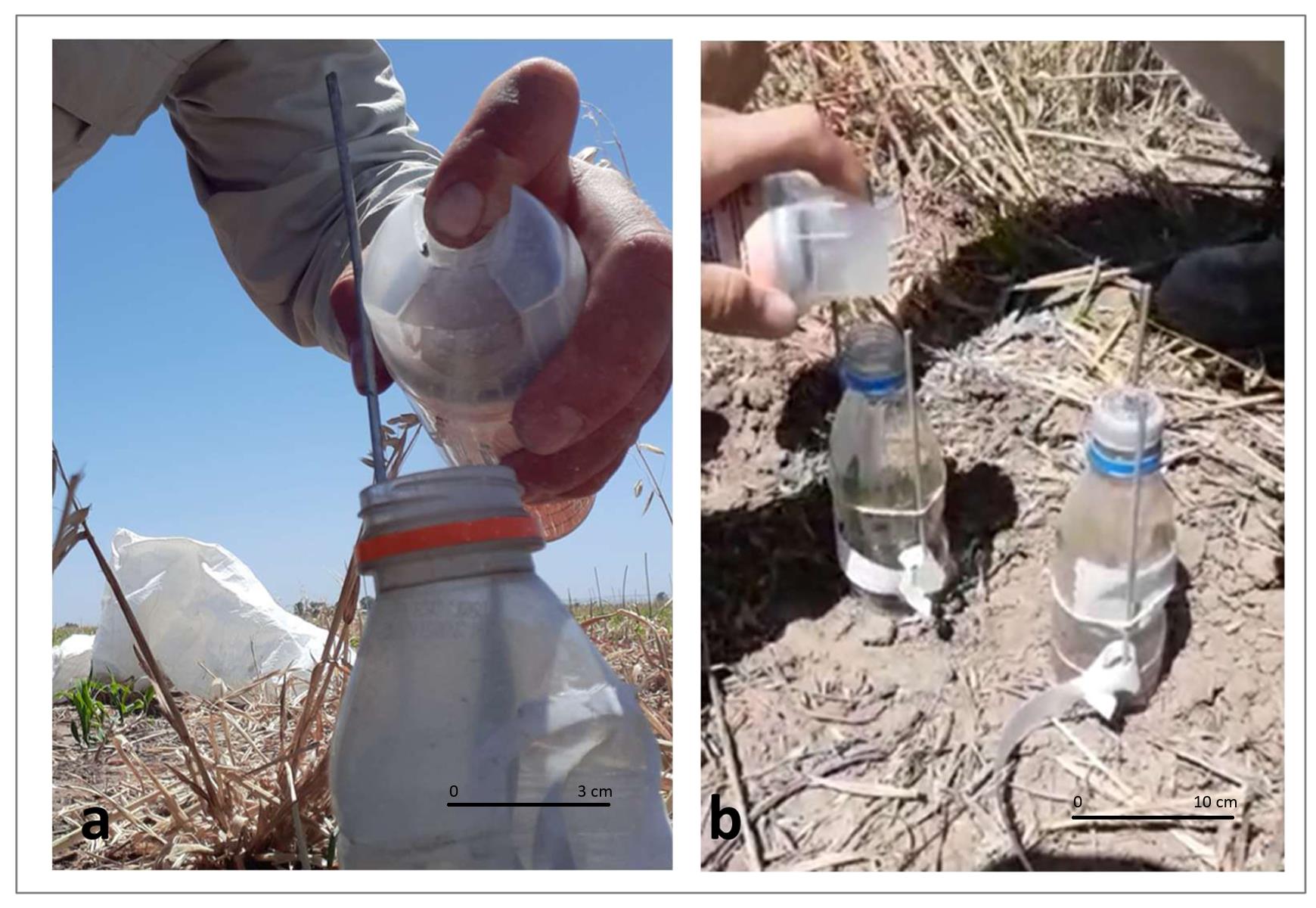
Figure 6. Biosafety procedure at the end of the field assay. (a, b) Controlled application of a contact insecticide (e.g., Raid®) inside the PET bottle enclosures. This final step ensures total insect mortality before the cages are dismantled and removed from the field, preventing any potential dispersal of viruliferous D. kuscheli in the endemic area.
Data analysis
Although this protocol does not directly involve data analysis, it provides both the foundation for establishing a large-scale planthopper rearing system and a detailed field transmission methodology essential for implementing diverse experiments, such as the field evaluation of maize germplasm for virus resistance. For these evaluations, test 9–10 plants per germplasm accession and perform the assay in triplicate to ensure statistical robustness.
Assess mal de Río Cuarto (MRC) symptoms in maize at 90 days post-inoculation (dpi). Subsequently, classify individual plants by disease severity according to the scale established by March et al. [19]. For each genotype, calculate disease incidence (INC) as the proportion of symptomatic plants relative to the total number of plants evaluated. Furthermore, estimate the Disease Severity Index (DSI) by integrating both incidence and severity data, following the methodology described by Di Renzo et al. [20] (Table 1).
Finally, perform an analysis of variance (ANOVA) to identify significant differences in incidence and severity among genotypes. Prior to analysis, check the data for normality and homoscedasticity; if data do not meet these criteria, use nonparametric tests as an alternative.
Validation of protocol
We validated the robustness of this methodology across three consecutive growing seasons through independent collaborative field trials with private companies conducted under confidentiality agreements. The experimental design consisted of three replicates for each maize genotype, involving the infestation of nine plants per genotype.
To assess the stability of the protocol under varying vector pressures, we increased the number of viruliferous insects per plant over the years: 9, 12, and 16 individuals in the first, second, and third seasons, respectively. We observed no significant differences in infection percentages across these densities, demonstrating the high efficiency and consistency of the transmission methodology regardless of the insect load within this range. Table 1 summarizes the Disease Severity Index (DSI) and the incidence results obtained from the assay using an inoculum pressure of 9 insects per plant. The experimental validation (Table 1) revealed a clear differentiation among genotypes. Incidence ranged from 0% (Genotype 10) to 57.3% (Genotype 6), while the DSI followed a consistent upward trend, peaking at 31.47.
Table 1. Validation of the transmission protocol under field conditions (9 insects/plant). Mean Disease Severity Index (DSI) and mean incidence (percentage of infected plants) with their respective standard deviations (SD) for 12 maize genotypes.
| Genotype | DSI (mean ± SD) | Incidence (%) (mean ± SD) |
|---|---|---|
| Genotype 10 | 0.00 ± 0.00 | 0.0 ± 0.0 |
| Genotype 8 | 2.47 ± 4.27 | 7.3 ± 12.7 |
| Genotype 4 | 6.17 ± 2.14 | 18.3 ± 12.7 |
| Genotype 2 | 7.41 ± 10.47 | 16.5 ± 23.3 |
| Genotype 7 | 8.63 ± 5.65 | 22.0 ± 11.0 |
| Genotype 5 | 9.26 ± 2.62 | 22.0 ± 15.6 |
| Genotype 3 | 9.87 ± 11.31 | 25.7 ± 22.9 |
| Genotype 12 | 11.11 ± 6.41 | 18.3 ± 6.4 |
| Genotype 9 | 16.05 ± 16.70 | 20.7 ± 20.0 |
| Genotype 11 | 17.28 ± 16.70 | 52.0 ± 28.2 |
| Genotype 1 | 18.52 ± 5.24 | 27.5 ± 7.8 |
| Genotype 6 | 31.47 ± 17.68 | 57.3 ± 25.1 |
To control for potential experimental artifacts, we fitted a group of randomly selected plants with the transmission cages (without insects) to evaluate the "bottle effect" on seedling development. We observed no visual differences in growth or development between these control plants and the rest of the plants in the open field, indicating that the enclosure system does not interfere with normal plant physiology.
General notes and troubleshooting
General notes
1. Operator experience: This protocol relies on the ability to identify the developmental stages of D. kuscheli. Personnel should have prior experience in handling delphacids to ensure minimal stress to the insects during transfer.
2. Environmental variability: Since field conditions are unpredictable, always include susceptible and resistant check hybrids in every assay to validate transmission efficiency. Furthermore, extreme solar radiation can increase the temperature inside the 500 mL PET bottles; the voile windows mitigate this greenhouse effect, ensuring insect survival and consistent feeding behavior during the inoculation.
3. Applicability: While designed for MRCV in maize, researchers can adapt this method for other planthopper-transmitted viruses. Adjust the insect density in the 500 mL bottles according to the crop; for instance, while maize requires 9–16 insects per plant, winter cereals may only require 3–5 insects due to higher transmission efficiency in those hosts.
4. Plant phenological stage: The optimal developmental stage for inoculation depends on the crop. For maize, perform the assay at the coleoptile or V1 stage. In contrast, for winter cereals, aim for the period between emergence and the V2 stage to achieve maximum transmission efficiency. Inoculating plants beyond these windows may significantly reduce the success rate of the viral infection.
5. Validation of vector viruliferous status: The wheat plants used in the test tubes during transport can serve as an internal control for the assay. After transferring the insects into the transmission cages, take these transport plants back to the laboratory and transplant them into pots. Monitor these plants for symptom development to confirm that the insect population was indeed viruliferous and that the acquisition period was successful.
6. Biosafety and regulatory compliance: The field assays described in this protocol were conducted within the endemic region of mal de Río Cuarto virus (Department of Río Cuarto, Córdoba, Argentina). The viral isolate and the D. kuscheli breeding population maintained at IPAVE (INTA) both originate from the Río Cuarto department. Since the assay is conducted within the endemic area, it poses no risk of introducing new pathogens or vectors. Furthermore, apply a contact insecticide to each enclosure before removal to ensure the containment of all viruliferous insects.
Troubleshooting
Common problems that might occur during the implementation of this protocol, such as humidity control, colony management, or field stability, and their proposed solutions are summarized in Table 2.
Table 2. Troubleshooting guide for D. kuscheli rearing and MRCV field transmission
| Step | Problem | Potential cause | Solution |
| Mass rearing | Excessive humidity and fungal growth inside the cages | Poor ventilation or overwatering | Ensure the use of fine-mesh (voile) windows on one side and on the top of the 6 L containers. This configuration provides adequate ventilation while maintaining the structural integrity of the repurposed bottle for easier handling. Water only when the soil surface starts to dry and, if necessary, use sterilized soil. |
| Colony maintenance | High insect mortality or decline in population | Excessive insect density or poor seedling quality (advanced plant age) | Maintain a maximum of 300–400 nymphs per 6 L cage. Replace seedlings every 7–10 days, ensuring old plants are only removed after nymphs have emerged to avoid egg loss. If density is too high, split the colony into new units to ensure continuous food availability. |
| Transport | Insect mortality due to moisture condensation inside test tubes | Exposure of the cooling box to direct sunlight or high temperatures before use | Keep the cooling box in a shaded, cool area until the transmission assay begins. Avoid opening the box unnecessarily to maintain a stable internal temperature and prevent condensation. |
| Transmission | Inconsistent infection rates in susceptible controls | Failure to reach the transmission threshold | Ensure the insects have completed the required latency period (approximately 20 days) after virus acquisition [6]. |
| Field assay | Enclosures (cages) tipping over or dislodging | Uneven ground due to weeds or poor anchoring against wind | Clear all weeds from the base of the plant to ensure the tray is buried deep enough. Secure the cage by placing two stakes on opposite sides, fastened to the bottle with elastic rubber bands for extra stability. |
Acknowledgments
A.D.D. and M.F.M. conceived the work and co-wrote the manuscript; A.D.D. designed all figures; J.B.B. and M.R.B. maintained the insect populations and obtained viruliferous insects; N.A.P. constructed the cages for field transmission assays; S.M.R. contributed to the breeding cage design and collaborated on insect rearing; J.B.B., N.A.P., A.D.D., and M.F.M. performed the field transmission assays. All authors have read and agreed to the published version of the manuscript. The authors gratefully acknowledge the financial support provided by research project PICT 2021 No. 0237 from the Agencia Nacional de Promoción de la Investigación, el Desarrollo Tecnológico y la Innovación (Argentina), PL-6282-336 from the Instituto Nacional de Tecnología Agropecuaria (INTA) (Argentina), and Fundación ArgenINTA (Argentina). We also thank Syngenta Agro S.A. for providing the field site for the assays, Dr. Evangelina Argüello Caro (IPAVE-INTA) for her valuable contributions during the writing of the manuscript, and Dr. Pablo Gonzalez (IFRGV-INTA) for his assistance during the photo shoot for the cover.
Competing interests
The authors declare no conflicts of interest.
References
- Lenardon, S. L, March, G. J., Nome, S. F. and Ornaghi, J. A. (1998). Recent outbreak of “mal de Rio Cuarto” virus on corn in Argentina. Plant Dis. 82(4): 448. https://doi.org/10.1094/PDIS.1998.82.4.448C
- Lenardon, S. L., March, G. J. and Ornaghi, J. A. (1999). Virus del mal de Río Cuarto en maíz (Hoja Informativa. Maíz 2. No. 10). INTA. Instituto de Fitopatología y Fisiología Vegetal.
- Torrico Ramallo, A. K., Ruiz Posse, A., Dumón, A. D., Mattio, M. F., Corro Molas, A., Genero, M. I., Franz, N., Denegri, D., Donadio, H., Guillot Giraudo, W., et al. (2022). Incidence of mal de Rio Cuarto disease and vector infectivity in localities of the endemic and surrounding area, 2020/21. Phytopathology. 59th Meeting of the APS Caribbean Division. https://doi.org/10.1094/PHYTO-112-3-S1.1
- Milne, R. G. and Lovisolo, O. (1977). Maize rough dwarf and related viruses. En: Lauffer, M. A.; Bang, F. B.; Maramorosch, K.; Smith, K. M. (eds). Adv. Virus Res. Vol. 21. Academic Press, p. 267–341. https://doi.org/10.1016/S0065-3527(08)60764-2
- Arneodo, J. D., Guzman, F. A., Conci, L. R., Laguna, I. G. and Truol, G. A. (2002). Transmission features of Mal de Río Cuarto virus in wheat by its planthopper vector Delphacodes kuscheli. Ann Appl Biol. 141(2): 195–200. https://doi.org/10.1111/j.1744-7348.2002.tb00212.x
- Hogenhout, S. A., Ammar, E. D., Whitfield, A. E. and Redinbaugh, M. G. (2008). Insect vector interactions with persistently transmitted viruses. Annu. Rev. Phytopathol. 46(1): 327–359. https://doi.org/10.1146/annurev.phyto.022508.092135
- Ornaghi, J. A., March, G. J., Boito, G. T., Marinelli, A., Beviacqua, J. E., Giuggia, J. and Lenardon, S. L. (1999). Infectivity in natural populations of Delphacodes kuscheli, vector of "mal de Río Cuarto" virus. Maydica 44: 219–223.
- Brentassi, M. E., Machado-Assefh, C. R., Alvarez, A. E. (2019). The probing behaviour of the planthopper Delphacodes kuscheli (Hemiptera: Delphacidae) on two alternating hosts, maize and oat. Austral Entomol. 58(3): 666–674. https://doi.org/10.1111/aen.12383
- Virla, E. and Remes Lenicov, A. M. M. (1991). Ciclo de vida de Delphacodes kuscheli criado sobre diferentes hospedantes en condiciones de laboratorio (Insecta: Homoptera: Delphacidae). Actas del Taller de Actualización sobre Mal de Río Cuarto, p. 104–115.
- Truol, G. A., Usugi, T., Hirao, J., Arneodo, J. D., Giménez Pecci, M. P. and Laguna, I. G. (2001). Transmisión experimental del virus del mal de Río Cuarto por Delphacodes kuscheli. Fitopatol Bras. 26(1): 39–44. https://doi.org/10.1590/S0100-41582001000100007
- Bosque-Pérez, N. A. and Alam, M. S. (1992). Mass rearing of Cidalunia leafhoppers to screen for maize streak virus resistance: A manual. Internat Inst Tropical Agriculture. https://hdl.handle.net/10568/98728
- Arneodo, J. D., Guzmán, F., Ojeda, S., Ramos, M. L., Laguna, I., Conci, L. and Truol, G. (2005). Transmisión del Mal de Río Cuarto virus por ninfas de primer y tercer estadio de Delphacodes kuscheli. Pesqui Agropecu Bras. 40(2): 187–191. https://doi.org/10.1590/S0100-204X2005000200014
- Mattio, M. F., Cassol, A., Remes Lenicov, A. M. D. and Truol, G. (2008). Tagosodes orizicolus: Nuevo vector potencial del Mal de Río Cuarto virus. Trop Plant Pathol. 33(3): 237–240. https://doi.org/10.1590/S1982-56762008000300010
- Argüello Caro, E. B., Maroniche, G. A., Dumón, A. D., Sagadín, M. B., del Vas, M. and Truol, G. (2013). High viral load in the planthopper vector Delphacodes kuscheli (Hemiptera: Delphacidae) is associated with successful transmission of mal de Río Cuarto virus. Ann Entomol Soc Am. 106(1): 93–99. https://doi.org/10.1603/AN12076
- Di Rienzo, J. A., Casanoves, F., Balzarini, M. G., Gonzalez, L., Tablada, M. and Robledo, C. W. (2012). InfoStat Version 2012. Computer Program. Córdoba, Argentina. https://www.infostat.com.ar/
- Di Feo, L., Otero, M. L., Tolocka, P. A., Mattio, M. F., Dumón, A. D., Trucco, V., Vilanova Perez, A., Gómez Montenegro, B. (2025). (Capítulo 4). Ensayos biológicos para el diagnóstico de microorganismos fitopatógenos. En: Di Feo, L., Giayetto, A. and Rodríguez Pardina, P. (Eds.). Técnicas de detección de Fitopatógenos. ISBN 978-631-01-1694-5. https://lnkd.in/dESCCCRH
- Ornaghi, J. A., Boito, G. T., Beviacqua, J. E., Marinelli, A., Giuggia, J. and Sanchez, G. (1995). Incidencia, severidad y pérdidas de producción por Mal de Río Cuarto según su transmisión en diferentes estados fenológicos del maíz. Resúmenes IX Jornadas Fitosanitarias Argentinas, p. 84.
- Achon, M. A., Serrano, L., Sabate, J. and Porta, C. (2015). Understanding the epidemiological factors that intensify the incidence of maize rough dwarf disease in Spain. Ann Appl Biol. 166(2): 311–320. https://doi.org/10.1111/aab.12184
- March, G. J., Ornaghi, J. A., Beviacqua, J. E. and Lenardon, S. L. (1997). Manual Técnico del Mal de Río Cuarto. (Ed). Morgan, Technologia Mycogen. Buenos Aires, Argentina. pp 41.
- Di Rienzo, M. A., Bonamico, N. C., Díaz, D. D., Salerno, J. C., Ibáñez, M. M. and Gesumaria, J. J. (2002). Inheritance of resistance to Mal de Río Cuarto (MRC) disease in Zea mays (L.). J Agric Sci. 139(1): 47–53. https://doi.org/10.1017/s0021859602002241
Article Information
Publication history
Received: Jan 5, 2026
Accepted: Feb 18, 2026
Available online: Mar 4, 2026
Published: Mar 20, 2026
Copyright
© 2026 The Author(s); This is an open access article under the CC BY-NC license (https://creativecommons.org/licenses/by-nc/4.0/).
How to cite
Dumón, A. D., Barcenilla, M. R., Bariles, J. B., Pereyra, N. A., Rodriguez, S. M. and Mattio, M. F. (2026). Controlled Transmission of a Fijivirus Under Field Conditions Using Mass-Reared Planthoppers. Bio-protocol 16(6): e5642. DOI: 10.21769/BioProtoc.5642.

 Download Citation in RIS Format
Category
Plant Science > Plant immunity > Disease bioassay
Plant Science > Plant immunity > Plant-insect interaction
Microbiology > Microbe-host interactions > Virus
Do you have any questions about this protocol?
Post your question to gather feedback from the community. We will also invite the authors of this article to respond.
 Post a Question


